LOVE VALLEY, NORTH CAROLINA - THE WILD WEST TOWN IN THE HEART OF THE SOUTH
Picture this: You're driving through the rolling hills of North Carolina. Past tobacco farms and horse pastures. Through typical small Southern towns with their churches and barbecue joints.
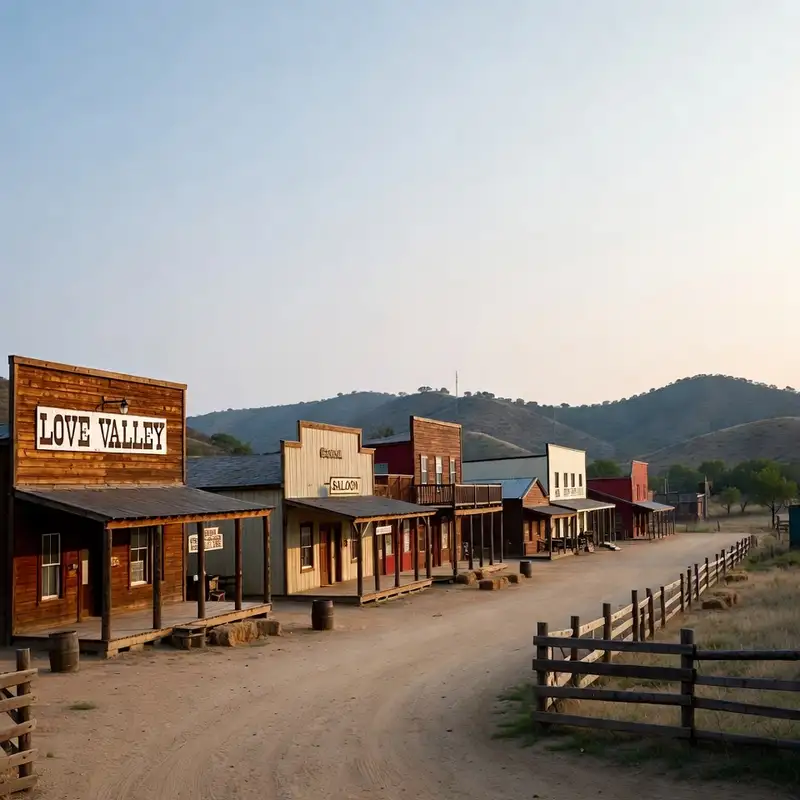
And then suddenly, you round a corner and see it—a town that looks like it was plucked straight out of an old Western movie. Dirt streets. Hitching posts. Saloons with swinging doors. Cowboys on horseback riding down Main Street.
You haven't traveled back in time. You've just arrived in Love Valley, North Carolina—one of the most unique, fascinating, and downright bizarre towns in America.
I'm Summer, and welcome to the Duke Tyner podcast. Today, we're diving deep into the story of Love Valley—how it started, why it exists, what it's like today, and the surprising connections it has to Hollywood and country music royalty.
This is a story about one man's wild dream to recreate the Old West in the middle of North Carolina. And somehow, against all odds, that dream is still alive.
Let's ride into Love Valley.
SEGMENT 1: THE FOUNDING - ANDY BARKER'S WILD WEST DREAM
Love Valley's story begins with one man: Andy Barker. And trust me, Andy Barker was a character.
Born in 1929, Andy grew up in Charlotte, North Carolina. He was a successful businessman, a devout Christian, and a man with a vision that everyone thought was completely insane.
In 1954, at just 25 years old, Andy Barker bought 1,000 acres of land in Iredell County, North Carolina, about 50 miles north of Charlotte.
His plan? To build an authentic Old West town. In North Carolina. In the 1950s.
People thought he'd lost his mind.
But Andy had a philosophy. He believed that modern American society was becoming too urbanized, too disconnected from nature, too reliant on automobiles and technology. He wanted to create a place where people could live simply, close to the land, connected to horses and the cowboy way of life.
He wanted to recreate the values and lifestyle of the Old West—self-reliance, community, simplicity, and a connection to the land.
So he started building. And not just any town—a historically accurate Old West town.
The original Main Street was just 100 feet long. Every building was designed to look like something from the 1880s. Wooden storefronts with covered walkways. Hitching posts for horses. A saloon. A general store. A church at the end of the street.
But here's the kicker: No cars were allowed in the town limits. Only horses.
Main Street was—and still is—a dirt road. If you wanted to visit Love Valley, you came on horseback, or you parked your car outside of town and walked in.
Andy Barker officially incorporated Love Valley as a town in 1963. It became North Carolina's newest—and most unusual—municipality.
And yes, they actually had a mayor and town council. Andy was the first mayor, serving from 1963 until his death in 2008. That's 45 years as mayor of his own Western town.
But why "Love Valley"?
Andy was a deeply religious man. He named the town "Love Valley" because he believed that love—Christian love, neighborly love, love of the land—was the foundation of a good community.
The name has caused some confusion over the years. People assume it's some kind of hippie commune or romantic getaway spot. Nope. It's literally a cowboy town named after Christian principles.
By the late 1960s, Love Valley had about 100 full-time residents, all living without cars, all traveling by horse, all embracing the cowboy lifestyle.
It was bizarre. It was audacious. And somehow, it worked.
SEGMENT 2: THE HEYDAY - RODEOS, CONCERTS, AND 30,000 VISITORS
The 1960s and 70s were Love Valley's golden age. This wasn't just a quirky little town—it became a legitimate destination.
Andy Barker started hosting events. Big events.
The Love Valley Rodeo became the town's signature attraction. Professional rodeo riders came from across the country to compete. Bull riding, bronco busting, barrel racing, roping competitions—the real deal.
On rodeo weekends, thousands of people would descend on this tiny town. They'd camp in the surrounding hills, ride their horses through the trails, and party in the saloons.
But then something unexpected happened: Love Valley became a concert venue.
In the late 1960s and early 70s, Love Valley hosted major country music concerts and even rock festivals. Artists like:
- Waylon Jennings
- Willie Nelson
- Charlie Daniels
- The Allman Brothers Band
- The Marshall Tucker Band
These weren't small shows. We're talking about 10,000 to 30,000 people showing up to concerts in Love Valley.
Picture this: A tiny Western town in the middle of nowhere, North Carolina, suddenly hosting massive music festivals. Hippies, cowboys, bikers, and Southern rock fans all converging on this dirt-street town.
The most famous event was the 1970 Love Valley Rock Festival, which drew an estimated 25,000-30,000 people over several days. It was North Carolina's answer to Woodstock, except it happened in a cowboy town and featured both rock bands and rodeo events.
Can you imagine the culture clash? Cowboys on horses next to hippies smoking weed. Southern rock blasting through speakers while someone's roping cattle. It was absolute chaos—and apparently, it was amazing.
But the massive crowds created problems.
The infrastructure of Love Valley couldn't handle tens of thousands of people. Sanitation became an issue. Traffic (yes, cars had to park somewhere) overwhelmed the area. Local authorities got nervous about drugs and the countercultural vibe.
By the mid-1970s, the big concert festivals ended. Love Valley returned to being primarily a rodeo town and equestrian community.
But for about a decade, Love Valley was the wildest, most unexpected party destination in the South.
SEGMENT 3: THE TOWN LAYOUT - WHAT LOVE VALLEY ACTUALLY LOOKS LIKE
Let me paint you a picture of what Love Valley looks like if you visit today.
Main Street is the heart of the town. It's exactly 100 feet long—you can walk the entire length in about 30 seconds.
The street is dirt. Not paved. Dirt. Because horses don't need pavement.
On both sides of Main Street, you've got authentic Old West-style buildings:
The Love Valley Saloon - The social hub of town. Swinging doors, wooden bar, country music on the jukebox. You can order a beer and sit on the porch watching horses go by.
The General Store - Sells western wear, horse tack, souvenirs, snacks. It's functional but also serves tourists.
The Town Hall - Where the mayor and town council conduct official business. Yes, they still have town meetings and pass local ordinances.
The Chapel - A small, beautiful church at the end of Main Street. Andy Barker built it as the spiritual center of the community.
Various shops and cabins - Some are businesses, some are residences. All maintain the Western aesthetic.
At the end of Main Street, there's a hitching post rail that runs the length of the street. This is where people tie up their horses when they come into town. It's not a decoration—it's functional. People actually use it.
Beyond Main Street, Love Valley extends into the surrounding hills. There are about 40-50 homes scattered around the valley, most accessible only by horseback or on foot.
Residents live without cars in the immediate town area. They use horses, four-wheelers, or walk. If they need to drive somewhere, they park outside the town limits and ride or walk in.
The total town area is about 1,000 acres of rolling hills, forests, and pastures. It's beautiful—green valleys, horse trails winding through woods, creeks running through the property.
There are over 40 miles of horseback riding trails that wind through Love Valley and connect to surrounding properties. This is a horseback rider's paradise.
The population today is small—officially about 90-100 residents. But that number swells on weekends and during events when visitors come to ride, stay in cabins, and experience the Western lifestyle.
The architecture is strictly controlled. New construction must fit the Old West aesthetic. You can't build a modern house with vinyl siding in Love Valley. Everything has to look like it belongs in 1880s Wyoming.
It's surreal. You're in North Carolina—red clay, pine trees, humid Southern air—but you're walking down a dirt street past saloons and hitching posts. It feels like a movie set, except people actually live here.
SEGMENT 4: DAILY LIFE - WHAT IT'S LIKE TO LIVE IN LOVE VALLEY TODAY
So what's it actually like to live in Love Valley in 2024?
Let's talk to some of the people who've made this unusual place their home.
First, the practical stuff:
No cars on Main Street. This rule is still strictly enforced. If you live in Love Valley, you either walk, ride a horse, or use an ATV to get around town.
But residents do own cars. They just park them outside the town limits. Most people have a truck or SUV parked at the edge of town that they use when they need to go to "the outside world" for work, shopping, or appointments.
Many residents own horses. That's kind of the point of living here. If you move to Love Valley and don't have a horse, you're missing out on 90% of the experience.
The homes vary widely. Some are historic cabins from the 1960s. Others are newer (built in the last 20-30 years) but designed to match the Western aesthetic. A few are quite nice—rustic luxury, you might say.
Utilities are modern. People have electricity, running water, internet, cell phones. This isn't a primitive back-to-the-land experiment. It's a Western-themed town with modern conveniences.
The community is tight-knit. With only about 90-100 residents, everyone knows everyone. It's like a small village where your neighbors are also your friends, your fellow riders, and your support system.
Employment is mixed. Some people work remotely (internet makes this possible). Others commute to nearby towns like Statesville or Mooresville for work. Some are retired. A few work in town—running the saloon, the general store, or offering trail riding services.
Children who grow up here attend regular public schools in nearby Statesville. The town doesn't have its own school—it's too small.
Social life revolves around horses and events. Weekend trail rides, rodeos, barn parties, the annual Love Valley Horse Show, community dinners at the saloon. If you're not into horses, you'll be bored.
Tourists are part of daily life. On weekends, especially during good weather, hundreds of visitors come to ride the trails, eat at the saloon, take photos on Main Street, and experience the Western vibe.
Residents are generally welcoming—tourism is part of the town's economy—but there's definitely a distinction between "townies" (full-time residents) and "visitors" (tourists and weekend riders).
The pace of life is slow. Nobody's rushing anywhere. You can't rush on horseback. The whole point is to disconnect from the frenetic pace of modern life.
It's not for everyone. If you need Starbucks, Target, and Amazon same-day delivery, Love Valley isn't your place. But if you want to live simply, ride horses, know your neighbors, and escape the rat race—it might be paradise.
SEGMENT 5: THE EVENTS - RODEOS, FESTIVALS, AND GATHERINGS
Love Valley isn't just a place people live—it's a destination for events. And some of these events are pretty legendary in the equestrian and rodeo communities.
THE LOVE VALLEY RODEO
This is the big one. Held multiple times a year, the Love Valley Rodeo attracts professional and amateur riders from across the Southeast.
Events include:
- Bull riding
- Bronco riding
- Barrel racing
- Calf roping
- Steer wrestling
- Team roping
It's sanctioned by professional rodeo associations, meaning riders can earn points and prizes. This isn't a tourist show—it's a real rodeo with real cowboys and cowgirls competing.
On rodeo weekends, the town swells to several thousand people. Campers and RVs fill the surrounding fields. Horses are everywhere. The saloon is packed. It's a true Western festival atmosphere.
THE LOVE VALLEY HORSE SHOW
This annual event showcases various horse breeds and riding disciplines. English riding, Western pleasure, jumping, dressage—all levels from beginners to advanced competitors.
It's family-friendly and draws participants from across North Carolina and neighboring states.
CHRISTMAS IN LOVE VALLEY
Every December, Love Valley transforms into a Christmas Western town. Decorations, caroling, a community dinner, a living nativity with real horses.
It's charming and surprisingly well-attended. People come from Charlotte and beyond to experience a Western-themed Christmas.
BIKE RALLIES
Interestingly, Love Valley has become popular with motorcycle enthusiasts. Several times a year, hundreds of bikers descend on the town for rallies.
Cowboys and bikers? It works. Both groups appreciate the freedom, the open road (or trail), and the independent spirit Love Valley represents.
TRAIL RIDE WEEKENDS
These happen year-round. Groups organize multi-day trail rides where riders camp in Love Valley and spend days exploring the 40+ miles of trails.
Some of these gatherings draw 50-100 riders. It's social, it's active, and it's the core of what makes Love Valley special.
MUSIC AND FESTIVALS
While Love Valley no longer hosts massive rock festivals like in the 1970s, they still have smaller music events—country bands, bluegrass, folk music. Usually held at the saloon or in an outdoor venue.
The events are what keep Love Valley alive economically and culturally. Without them, it would just be a quirky residential community. The events bring visitors, revenue, and energy to this unusual town.
SEGMENT 6: FAMOUS RESIDENTS AND VISITORS
So has anyone famous ever lived in or visited Love Valley?
Actually, yes. Some pretty interesting people have connections to this little Western town.
ANDY BARKER HIMSELF
Andy Barker, the founder, became somewhat famous in his own right. He was featured in newspapers, magazines, and TV shows about unusual American towns.
He was a character—always dressed in Western wear, always on horseback, always evangelizing about the cowboy way of life.
He served as mayor from 1963 to 2008—45 years. That's got to be some kind of record. He died in 2008 at age 78, but his legacy lives on.
COUNTRY MUSIC STARS
During the 1970s concert era, major country music stars performed in Love Valley:
- Willie Nelson
- Waylon Jennings
- Charlie Daniels
- Hank Williams Jr.
These weren't just quick appearances—some of these artists hung out in Love Valley, rode horses, drank in the saloon with locals, and genuinely enjoyed the vibe.
SOUTHERN ROCK LEGENDS
The Allman Brothers Band, Marshall Tucker Band, and other Southern rock groups played the Love Valley Rock Festival in 1970.
There are stories of band members camping in the hills, jamming around campfires, and riding horses between sets.
RODEO CHAMPIONS
Numerous professional rodeo riders have competed at Love Valley Rodeo over the decades. Some have gone on to national championships.
The rodeo community knows Love Valley as a legitimate venue with good prize money and well-organized events.
CURRENT RESIDENTS
No A-list celebrities currently live in Love Valley full-time (as far as public records show). The town's isolation and lack of modern amenities don't appeal to most famous people.
But there are successful businesspeople, artists, and professionals who own property there as a retreat or weekend getaway.
The appeal of Love Valley for anyone seeking privacy is obvious—it's remote, off the beaten path, and the community is protective of residents' privacy.
VISITORS
Love Valley attracts curious visitors from all walks of life. Politicians (including North Carolina governors over the years), journalists, filmmakers, photographers, and tourists from around the world have visited.
It's been featured in:
- National Geographic
- Various travel documentaries
- Southern Living magazine
- Numerous regional publications
The town has a cult following among Western enthusiasts, history buffs, and people fascinated by unusual American communities.
SEGMENT 7: LOVE VALLEY IN FILM AND MEDIA
Has Love Valley been used as a movie set? Has it appeared in films or TV shows?
The answer is: Sort of, but not as much as you might think.
FILM AND TV PRODUCTIONS:
Love Valley's authentic Old West appearance makes it a natural filming location. However, there are challenges:
Challenge 1: It's a real, functioning town with residents. You can't just shut it down for weeks of filming without disrupting people's lives.
Challenge 2: The town is small. There's only one Main Street. Limited locations for varied shots.
Challenge 3: North Carolina has many purpose-built Western sets and ranches designed for film production that offer more flexibility.
That said, Love Valley has appeared in:
Regional Commercials - Several NC-based companies have filmed commercials there. Tourism ads, beer commercials, truck commercials—anything wanting an authentic Western backdrop.
Documentary Films - Multiple documentaries about unusual American towns have featured Love Valley. These explore the history, the residents, and the unique lifestyle.
Independent Films - A few low-budget indie films have used Love Valley for Western scenes. Nothing major that most people would recognize.
Music Videos - Country music videos occasionally film there. The aesthetic is perfect for country songs about small-town life, cowboys, and traditional values.
News Segments and Travel Shows - Love Valley has been featured on:
- CBS Sunday Morning
- Various regional news programs
- Travel Channel shows about unique American destinations
- YouTube travel vloggers and documentary makers
Photography and Art - While not "film" in the traditional sense, Love Valley is hugely popular with photographers. The aesthetic is so visually striking that it's been featured in countless photo essays, art projects, and social media content.
WHY HASN'T IT BEEN USED MORE?
Honestly, it's a combination of logistics and location. Love Valley is:
- Remote (not close to major film production hubs)
- Small (limited variety in locations)
- Occupied (real people live there)
- Protective (residents don't want their town overrun)
Productions that need Western locations often go to:
- Arizona or New Mexico (authentic desert West)
- California ranches (proximity to Hollywood)
- Purpose-built sets (complete control)
BUT Love Valley remains a hidden gem for filmmakers looking for authenticity without traveling across the country.
THE UNIQUE APPEAL:
What Love Valley offers that purpose-built sets don't: It's real.
The weathering on the buildings is natural. The dirt on the street has been compacted by decades of horse hooves. The atmosphere is genuine because people actually live this lifestyle.
For documentary filmmakers, photographers, and artists seeking authenticity, Love Valley is invaluable.
I wouldn't be surprised if we see more Love Valley appearances in films and shows in the future, especially as streaming services hunger for content and unusual locations become more desirable.
SEGMENT 8: CHALLENGES AND CONTROVERSIES
Love Valley hasn't been without problems over its 70-year history. Let's talk about some of the challenges and controversies this unusual town has faced.
THE 1970 ROCK FESTIVAL
While it's now remembered nostalgically, at the time the Love Valley Rock Festival was controversial.
The problems:
- Estimated 25,000-30,000 attendees overwhelmed the tiny town
- Drug use was rampant (it was 1970, after all)
- Sanitation facilities were inadequate
- Local authorities feared riots or violence
- Some attendees refused to leave for days after the festival ended
The aftermath:
- Andy Barker and town leaders decided not to host large rock festivals anymore
- Relationships with county authorities were strained
- The town's reputation shifted from "quirky Western town" to "hippie festival grounds"
It took years to rebuild the town's image as a family-friendly destination.
ECONOMIC STRUGGLES
Love Valley has never been economically prosperous. The town's tax base is tiny—fewer than 100 residents means minimal tax revenue.
Challenges include:
- Maintaining infrastructure (roads, utilities)
- Funding town services
- Competing with modern equestrian facilities that offer more amenities
- Keeping businesses viable with such a small customer base
The town relies heavily on event revenue and tourism to stay financially afloat.
GENERATIONAL CHANGES
When Andy Barker founded Love Valley, he attracted like-minded people who shared his vision. But as the founding generation ages and passes away, will younger people embrace the lifestyle?
Questions:
- Will millennials and Gen Z move to a town without cars, modern conveniences, or fast internet?
- Can Love Valley attract young families?
- What happens when the current generation of residents moves on?
DEVELOPMENT PRESSURE
The land around Love Valley is increasingly valuable. The Charlotte metro area continues to expand northward. Developers eye the rolling hills and beautiful landscapes.
The tension:
- Selling land to developers could bring money to current landowners
- But development would destroy the character and isolation that make Love Valley special
- How does the town balance preservation with economic reality?
TOWN GOVERNANCE
With such a small population, town governance can be contentious. Everyone knows everyone, which means personal conflicts can become political conflicts.
Issues include:
- Disputes over how to spend limited town funds
- Disagreements about allowing more tourism vs. preserving privacy
- Conflicts between longtime residents and newcomers
- Debates about modernization vs. preservation
ANIMAL WELFARE CONCERNS
With so many horses in a concentrated area, ensuring proper care is crucial.
Concerns:
- Are all horses properly cared for?
- Is the trail system sustainable without causing environmental damage?
- Do rodeo events meet modern animal welfare standards?
Love Valley has generally maintained good standards, but it's an ongoing responsibility.
DESPITE THESE CHALLENGES, LOVE VALLEY SURVIVES.
The town has proven remarkably resilient. For 70 years, it's maintained its unique character and vision. That's no small feat.
SEGMENT 9: VISITING LOVE VALLEY - WHAT YOU NEED TO KNOWOkay, you're intrigued. You want to visit Love Valley. Here's what you need to know.
LOCATION:
Love Valley is in Iredell County, North Carolina, about:
- 50 miles north of Charlotte
- 20 miles west of Statesville
- 15 miles from Interstate 77
It's accessible but definitely off the beaten path. You won't accidentally stumble upon it.
GETTING THERE:
You'll need a car to reach Love Valley. GPS will get you there, but the last few miles are winding country roads.
Once you arrive, park in the designated parking areas outside of town. Remember: no cars on Main Street.
WHAT TO DO:
1. Walk Main Street - It takes 2 minutes. But that's the point. Take photos, absorb the atmosphere, check out the shops.
2. Visit the Love Valley Saloon - Grab a beer, a burger, sit on the porch, watch horses go by. This is the social hub.
3. Ride Horses - This is the main attraction. You can:
- Bring your own horse (if you have one and a trailer)
- Rent horses from local stables (several options in and around Love Valley)
- Join a guided trail ride
The trails are beautiful—40+ miles through forests, hills, creeks, and meadows.
4. Attend an Event - Check the Love Valley website for upcoming rodeos, horse shows, festivals, and gatherings. Events are when the town really comes alive.
5. Stay Overnight - There are cabins and camping options:
- Rent a cabin in Love Valley (several available through Airbnb and local operators)
- Camp at designated camping areas
- Stay at nearby hotels in Statesville and drive over
BEST TIMES TO VISIT:
Spring (April-May) - Beautiful weather, wildflowers blooming, trails in great condition.
Fall (September-October) - Gorgeous autumn colors, comfortable temperatures, less humidity than summer.
Rodeo Weekends - If you want the full experience with crowds, energy, and events.
Weekdays - If you want a quieter, more intimate experience with fewer tourists.
WHAT TO BRING:
- Comfortable walking shoes (you'll be walking on dirt roads)
- Sun protection (hat, sunscreen)
- Camera (the photo opportunities are incredible)
- Cash (some businesses are cash-only)
- Respect for the residents and horses
WHAT NOT TO EXPECT:
- Chain restaurants or stores
- Fast WiFi (cell service can be spotty)
- Modern shopping or entertainment
- Nightlife beyond the saloon
- Accessible parking on Main Street
Love Valley is what it is: a small, authentic Western town. Don't come expecting Disney-level amenities.
ETIQUETTE:
- Don't walk behind horses (they might kick)
- Ask before petting horses (not all are friendly)
- Respect residents' privacy (people actually live here)
- Don't litter or damage property
- Follow posted rules and trail guidelines
COST:
- Walking Main Street is free
- Horse rentals: $30-60 for a few hours
- Meals at the saloon: $10-20
- Cabin rentals: $100-200 per night
- Event admission: Varies (rodeos $10-20)
It's an affordable day trip or weekend getaway.
IS IT WORTH VISITING?
If you love horses, Western culture, history, or just unusual places—absolutely yes.
If you're looking for luxury, modern amenities, or typical tourist attractions—probably not.
Love Valley is a niche destination. But for the right person, it's magical.
SEGMENT 10: THE FUTURE OF LOVE VALLEY
So what does the future hold for Love Valley?
THE CHALLENGES:
1. Aging Population - Many current residents are older. Will younger people move in?
2. Economic Sustainability - Can the town remain financially viable with such a small tax base?
3. Development Pressure - As Charlotte sprawls northward, will Love Valley be swallowed by suburbs?
4. Changing Interests - Fewer young people are interested in horses and Western lifestyle compared to previous generations.
THE OPPORTUNITIES:
1. Agritourism and Experiential Travel - People are increasingly seeking authentic, unique experiences. Love Valley offers that.
2. Remote Work Revolution - With more people working from home, living in a quiet, beautiful place like Love Valley becomes more feasible.
3. Historic Preservation - Love Valley could be designated as a historic site, bringing grants and protection.
4. Expanded Events - More festivals, workshops, and gatherings could bring revenue and visitors.
5. Film and Media - As streaming services need content, Love Valley's unique aesthetic could attract more productions.
THE HOPE:
The people who care about Love Valley—residents, frequent visitors, horse enthusiasts—hope that the town's unique character survives.
They hope that in 2054, on Love Valley's 100th anniversary, there's still a dirt Main Street with horses tied to hitching posts. Still a saloon serving cold beer. Still trails winding through beautiful hills. Still a community of people choosing to live differently.
They hope that Love Valley remains a place where you can escape modern life, ride a horse, and experience a slice of the Old West—in the heart of North Carolina.
Will it happen? That depends on the next generation.
CONCLUSION
Love Valley, North Carolina is one of those places that shouldn't exist, but somehow does.
It's a town built on one man's crazy dream—Andy Barker's vision of recreating the Old West in the North Carolina hills.
It's a place where horses outnumber cars, where dirt roads are the norm, where the pace of life is measured in hoofbeats, not horsepower.
It's a town that hosted Willie Nelson and the Allman Brothers, that drew 30,000 people to a rock festival in 1970, that's been the site of countless rodeos and horse shows.
It's a community of about 100 people who've chosen to live differently—to embrace simplicity, to connect with horses and nature, to preserve a way of life that's vanished almost everywhere else.
It's a destination for people seeking authenticity—Western enthusiasts, horse lovers, history buffs, photographers, and travelers looking for something truly unique.
Love Valley has survived for 70 years against all odds. It's outlasted doubters, economic challenges, changing times, and countless predictions of its demise.
And it's still there. Still weird. Still wonderful. Still offering a glimpse of the Old West in the most unexpected place.
If you're ever in North Carolina, take a detour. Drive those winding country roads. Park your car. Walk down that dirt street. Have a beer in the saloon. Watch the horses go by.
You'll either think it's the strangest thing you've ever seen, or you'll fall in love with it.
Either way, you'll never forget it.
Thanks for listening to the Duke Tyner podcast. I'm Summer, and I hope you enjoyed learning about Love Valley—one of North Carolina's most unique treasures.
Until next time: Keep exploring. Keep discovering. Keep seeking out the weird and wonderful places that make America interesting.
Happy trails, everyone.