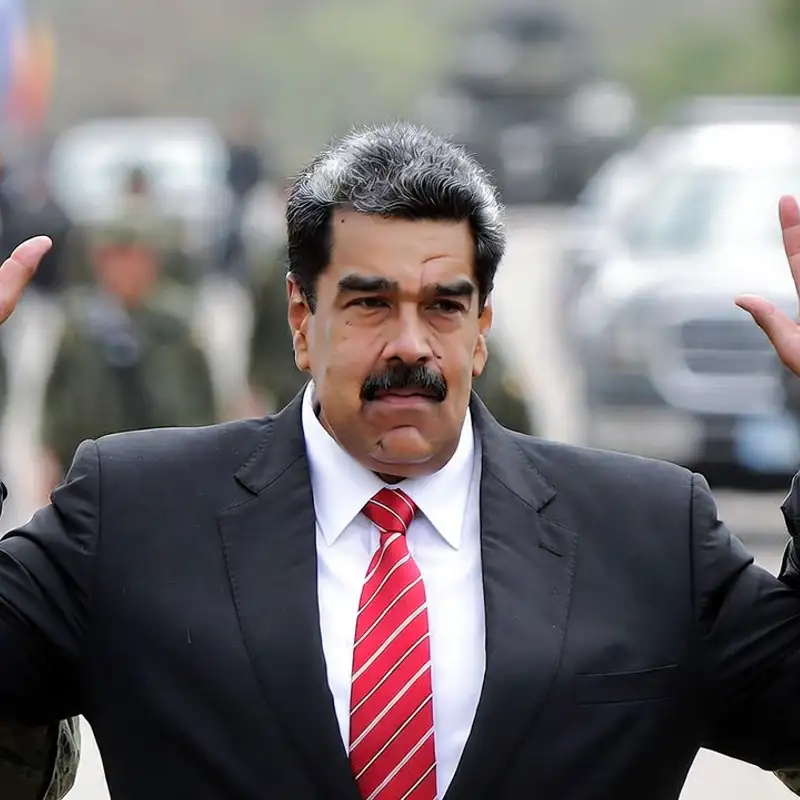
United States Captures Venezuelan President Nicolás Maduro in Dramatic Military Operation
Breaking News Report
United States Captures Venezuelan President Nicolás Maduro in Dramatic Military Operation
Good morning, this is Summer reporting on a special news report on the unprecedented events unfolding in Venezuela as of January 4, 2026.
In a stunning development that has shaken the world, U.S. forces launched a large-scale military strike on Venezuela early on January 3, resulting in the capture of President Nicolás Maduro and his wife, Cilia Flores. President Donald Trump announced the operation's success, stating that Maduro and Flores were "captured and flown out of the country" and are now in U.S. custody in New York, facing serious federal charges.
The operation, codenamed "Absolute Resolve," began in the pre-dawn hours with precision airstrikes targeting military sites across northern Venezuela, including the country's largest military complex, Fuerte Tiuna, in Caracas. Explosions rocked the capital around 2 a.m. local time, causing fires, power outages, and disruptions. Reports indicate at least 40 Venezuelan military personnel and civilians were killed, with two U.S. soldiers injured but no American fatalities.
U.S. Special Forces, including Delta Force commandos, then conducted a swift raid on a presidential compound, capturing Maduro and Flores in an operation lasting just over two hours. The couple was first transported to a U.S. Navy ship offshore before being flown to New York. Photos and video released by U.S. authorities show a handcuffed Maduro being escorted by DEA agents upon arrival at Stewart Air National Guard Base and later transferred to the Metropolitan Detention Center in Brooklyn. Maduro is expected to appear in Manhattan federal court as soon as Monday on updated charges from a long-standing indictment, including narco-terrorism conspiracy, cocaine importation, possession of machine guns and destructive devices, and related offenses. Attorney General Pam Bondi unsealed a superseding indictment alleging Maduro's leadership of the "Cartel de los Soles," a criminal network accused of flooding the U.S. with tons of cocaine over decades.
President Trump, speaking at a press conference from Mar-a-Lago, praised the mission as a "brilliant operation" and declared that the United States will temporarily "run" Venezuela to ensure a "safe, proper, and judicious transition." He emphasized revitalizing the country's vast oil reserves—the world's largest at over 300 billion barrels—stating that major American oil companies will invest billions to repair degraded infrastructure and "get the oil flowing again" for global markets. Trump indicated no immediate plans for large-scale ground troops but warned he would not hesitate if needed to stabilize the situation and prevent Maduro loyalists from regrouping.
On the ground in Venezuela, the country has declared a national emergency. The Supreme Court has named Vice President Delcy Rodríguez as interim leader, and she has issued defiant statements condemning the U.S. action as "aggression" while calling for resistance. State media broadcasts pro-Maduro rallies, and armed civilian groups known as colectivos are patrolling streets in Caracas, which remain tense but relatively calm so far. Borders have been temporarily closed, and power outages continue to affect daily life amid the ongoing humanitarian crisis.
The opposition, including Nobel Peace Prize winner María Corina Machado and exiled leader Edmundo González Urrutia—widely regarded as the legitimate winner of the disputed 2024 election—has called for the military to support a democratic transition.
International reactions are sharply divided. Russia, China, Cuba, Iran, Mexico, Brazil, and many others have condemned the operation as a violation of sovereignty and international law, with UN Secretary-General António Guterres calling it a "dangerous precedent" and scheduling an emergency Security Council meeting. Celebrations have erupted among Venezuelan diaspora communities in Miami, Santiago, and elsewhere, while anti-U.S. protests have occurred in cities like Paris and New York.
This marks the most direct U.S. intervention in Latin America since the 1989 Panama invasion, raising questions about legality, regional stability, and long-term implications for oil markets and global relations.
The situation remains highly fluid, with risks of resistance from Maduro supporters or broader instability. We'll continue to monitor developments closely.
This has been your special report on the crisis in Venezuela. Stay tuned for updates.
Update report on the Captures Maduro in Venezuela Strike
Early January 3, U.S. forces launched airstrikes on military targets in Caracas and elsewhere, followed by a special forces raid that captured President Nicolás Maduro and his wife, Cilia Flores. They were flown to New York, where Maduro faces federal narco-terrorism, drug trafficking, and weapons charges from an updated indictment.
President Trump announced the operation's success, stating the U.S. will temporarily "run" Venezuela for a "safe, proper, and judicious transition." He highlighted plans to revitalize the country's vast oil reserves with American companies investing billions to restore infrastructure.
In Venezuela, a national emergency was declared. Vice President Delcy Rodríguez has been named interim leader, condemning the action as aggression. Streets in Caracas are tense but calm, with pro-Maduro rallies and armed patrols.
The opposition, including María Corina Machado and Edmundo González Urrutia, calls for a democratic transition.
Global reactions are divided: Strong condemnations from Russia, China, Cuba, Iran, and many Latin American nations as a sovereignty violation. The UN Secretary-General called it a "dangerous precedent," with a Security Council meeting scheduled. Celebrations among Venezuelan diaspora; protests elsewhere.
The situation is fluid, with risks of instability. Maduro is detained in Brooklyn ahead of a court appearance.
We'll keep monitoring this developing story. Stay tuned.
Details on the U.S. Airstrikes in Venezuela -Operation Absolute Resolve, January 3, 2026
The U.S. military operation began in the early hours of January 3, 2026, around 2:00 a.m. local time in Venezuela, as part of a broader mission to capture President Nicolás Maduro.
Key elements of the airstrikes:
- Scale and assets: Involved over 150 U.S. aircraft, including fighter jets, electronic warfare planes, armed Reaper drones, refueling tankers, and helicopters. The operation was supported by a regional buildup, including the USS Gerald R. Ford aircraft carrier group.
- Primary objectives: Precision strikes targeted Venezuelan air defenses, military installations, and infrastructure to suppress resistance and clear paths for special forces helicopters to enter Caracas.
- Main targets struck:
- Fuerte Tiuna: Venezuela's largest military complex in Caracas; fires and explosions reported, with significant damage visible.
-
- La Carlota military airbase: In central Caracas; charred anti-aircraft vehicles and runway fires observed.
-
- La Guaira port: Damage to facilities, including a dock area allegedly linked to drug trafficking.
-
- Other sites: Higuerote Airport, additional military bases, and reported strikes near ports and an apartment complex (causing civilian casualties).
- Duration: The airstrikes and overall raid lasted approximately 2-4 hours, enabling a swift special forces extraction with minimal U.S. losses (2 soldiers injured, no fatalities).
- Casualties and impact: At least 40 Venezuelan military personnel and civilians killed; power outages in southern Caracas; national emergency declared in Venezuela.
The strikes paved the way for U.S. Special Forces (including Delta Force) to raid a presidential compound, capturing Maduro and his wife, Cilia Flores. They were transferred to the USS Iwo Jima before being flown to New York for federal charges.
This marked a major escalation after months of U.S. pressure, including boat strikes and oil tanker seizures. The situation remains tense, with global condemnations focusing on sovereignty concerns.
International Reactions to the U.S. Airstrikes and Capture of Nicolás Maduro
The U.S. military operation in Venezuela has elicited sharply divided global responses, with widespread condemnation focusing on violations of sovereignty and international law, cautious or mixed views from some allies, limited support from right-leaning leaders, and celebrations among Venezuelan diaspora communities.
Strong Condemnations
- Russia: Described the action as an "act of armed aggression" and a "grave violation of sovereignty," urging the U.S. to release Maduro and reaffirming solidarity with Venezuela.
- China: Called it "hegemonic behavior" that "seriously violates international law," expressing deep shock and opposition to the use of force against a sovereign state.
- Cuba: Labeled it "state terrorism" and a "criminal attack," demanding urgent international response.
- Iran: Condemned it as a "blatant violation" of sovereignty.
- Latin America, majority:
- Brazil President Lula da Silva: Said it "crossed an unacceptable line" and evoked "the worst moments of U.S. interference."
-
- Mexico: "Strongly condemns and rejects" the unilateral action as a violation of the UN Charter.
-
- Colombia President Petro: Rejected the "aggression" and deployed forces to the border over refugee concerns.
-
- Chile outgoing President Boric: Condemned foreign interference, calling for dialogue.
-
- Many others Uruguay, Nicaragua rejected military intervention.
United Nations
- Secretary-General António Guterres: "Deeply alarmed," calling it a "dangerous precedent" with implications for the region; emphasized respect for international law.
- An emergency UN Security Council meeting is scheduled for January 5-6, requested by Colombia, Russia, China, and Venezuela.
Mixed or Cautious Responses
- European Union: Called for restraint and respect for international law, while noting Maduro's lack of legitimacy.
- France: Stated the operation "violates the principle of non-use of force."
- Germany: Chancellor Merz acknowledged Maduro "led his country into ruin" but called the intervention "complex," prioritizing an orderly transition.
- UK Prime Minister Starmer: "Shed no tears" for Maduro's regime but upheld international law.
- Italy Prime Minister Meloni: Supported a democratic transition but viewed the action as legitimate defense against narcotrafficking threats.
Supportive Reactions
- Argentina President Milei: Celebrated with "Viva la libertad, carajo!" (Long live freedom, damn it!).
- Some right-leaning voices Chile's President-elect Kast, Ecuador's Noboa: Welcomed the end of Maduro's rule.
Public and Diaspora Responses
- Venezuelan Diaspora: Massive celebrations in Miami, Doral, Santiago, Chile, Lima Peru, Madrid, Spain, Buenos, Aires, and elsewhere—dancing, flags, chants of freedom, and hopes for return home.
- Protests Against U.S. Action: Demonstrations in Washington D.C. , outside White House, Berlin, Athens, Mexico City, Buenos Aires, and other cities, with anti-imperialist slogans and some burning U.S. flags.
The divide largely aligns with ideological lines: leftist governments and allies strongly oppose, while anti-Maduro figures and diaspora rejoice. The situation remains tense, with risks of further escalation highlighted by many leaders.
Venezuelan Opposition Leaders' Views on the U.S. Intervention and Maduro's Capture
The main Venezuelan opposition figures have largely welcomed Nicolás Maduro's removal, viewing it as a long-awaited step toward freedom and democracy, though they emphasize that power should transfer to their elected representatives rather than U.S. oversight or regime holdovers.
María Corina Machado -2025 Nobel Peace Prize winner, key opposition leader
- Celebrated the event as the "hour of freedom" for Venezuelans.
- Stated that Maduro now faces international justice for crimes against Venezuelans and others.
- Acknowledged that the U.S. action followed Maduro's refusal of a negotiated exit.
- Called for exiled opposition candidate Edmundo González Urrutia—widely recognized as the legitimate winner of the disputed 2024 election—to immediately assume the presidency and be recognized as commander-in-chief by the military.
- Declared the opposition is "prepared to enforce our mandate and take power," urging a peaceful, orderly transition.
- Her statements were posted on social media and republished widely; she has been a vocal supporter of increased U.S. pressure on Maduro in prior interviews.
Edmundo González Urrutia ,exiled opposition presidential candidate
- Reposted and endorsed Machado's statement.
- Described the moment as "decisive hours" and affirmed readiness for national reconstruction.
- No independent detailed statement reported yet, but he aligns fully with calls for him to assume power constitutionally.
Broader Opposition and Diaspora Reactions
- Initial ecstasy and celebrations among opposition supporters and Venezuelan massive street parties in Miami, Madrid, Santiago, Quito.
- Exiled figures like former lawmaker Manuel García called it the "beginning of a new stage" culminating in a transition led by Machado and González.
- Some activists expressed wariness, stressing the need for an "orderly, peaceful, and respectful" transition without regime continuity, rejecting Vice President Delcy Rodríguez's interim role).
- Note: President Trump publicly doubted Machado's ability to lead, saying she lacks "support or respect within the country" and that he has not contacted her, creating some tension despite opposition gratitude for Maduro's ouster.
Overall, the opposition sees the intervention as enabling their 2024 electoral mandate but insists on a Venezuelan-led democratic transition, not U.S. administration or deals with Maduro loyalists. The situation remains fluid as of January 4.
Reactions from Latin American Leaders to the U.S. Intervention in Venezuela
Latin American responses to the U.S. airstrikes and capture of Nicolás Maduro are deeply divided along ideological lines. Most leftist governments strongly condemned the action as a violation of sovereignty and international law, while right-wing leaders celebrated it as a blow against authoritarianism and narcotrafficking.
Strong Condemnations Primarily Leftist Leaders
- Brazil ,President Luiz Inácio Lula da Silva: Called the bombings and capture an "unacceptable line" crossed, a "grave affront to Venezuelan sovereignty," and a "dangerous precedent." He evoked "the worst moments of U.S. interference" in the region and urged firm international response.
- Mexico ,President Claudia Sheinbaum: "Strongly condemns and rejects" the unilateral military action as a violation of the UN Charter, jeopardizing regional stability as a "zone of peace."
- Colombia ,President Gustavo Petro: Rejected the "aggression against the sovereignty of Venezuela and Latin America," called for immediate UN and OAS meetings, and deployed troops to the border over refugee concerns.
- Chile ,Outgoing President Gabriel Boric: Expressed "concern and condemnation" of the military actions, calling for dialogue, multilateralism, and a peaceful solution rather than violence or foreign interference.
- Cuba ,President Miguel Díaz-Canel: Denounced it as a "criminal attack" and "state terrorism," demanding urgent international reaction.
- Honduras ,President Xiomara Castro: Called it "aggression" and Maduro's capture a "kidnapping," an affront to Latin American sovereignty.
- Uruguay: Rejected military intervention, monitoring with "serious concern" and calling for adherence to international law.
Supportive Reactions (Primarily Right-Wing Leaders)
- Argentina ,President Javier Milei: Celebrated with "La libertad avanza" ("Freedom advances") and "Viva la libertad, carajo!" Praised it as a decisive advance against narcoterrorism and hoped for opposition-led democracy reflecting the 2024 election results.
- Chile ,President-elect José Antonio Kast: Called Maduro's arrest "great news for the region" and urged accountability for the regime.
- Ecuador ,President Daniel Noboa: Welcomed it, saying "all criminal narco-Chavistas will have their moment" and the structure will collapse; greeted opposition leaders Machado and González.
- Peru ,Interim President José Jerí: Welcomed a "new era in democracy and freedom," offering facilities for Venezuelan migrants to return.
The split highlights longstanding regional tensions over U.S. influence, with many invoking historical interventions while others prioritize ending Maduro's rule. The situation remains tense as of January 4.
U.S. Plans for Controlling and Managing Venezuelan Oil
President Donald Trump has explicitly stated that a key objective of the U.S. intervention in Venezuela is to revitalize and exploit the country's massive oil reserves—the world's largest at over 303 billion barrels.
The U.S. will not directly nationalize or seize the oil fields but will exercise temporary oversight during the transition period while the country is "run" by the U.S. The primary mechanism involves partnering with major American oil companies to rebuild and operate the industry.
Key Elements of the Plan
- Private Investment by U.S. Companies: Trump announced that "very large United States oil companies—the biggest anywhere in the world" will enter Venezuela, invest billions of dollars to repair degraded infrastructure (pipelines, refineries, pumps, etc.), and ramp up production. Companies will fund the rebuilding directly and be reimbursed through oil revenues.
- Compensation for Past Seizures: The administration has privately told oil executives that compensation for assets nationalized by Hugo Chávez and Nicolás Maduro (e.g., rigs, pipelines seized in the 2000s) is conditional on companies returning now to invest heavily in revival efforts.
- U.S. Oversight and Reimbursement: Trump emphasized that the operation "won’t cost us a penny," with the U.S. reimbursed from "money coming out of the ground." Oil proceeds will benefit Venezuelans, compensate prior losses, and support the transition.
- Current Status: A U.S. embargo on Venezuelan oil remains in effect. No immediate large-scale exports are planned until infrastructure is restored and a stable transition occurs.
- Likely Companies Involved: Chevron is the only U.S. firm currently operating (under limited license) and is positioned to benefit most initially. Others like ExxonMobil and ConocoPhillips (which lost assets in past nationalizations) may join, though major oil companies have remained silent publicly on Trump's claims.
Challenges and Timeline
Analysts estimate rebuilding could cost tens to hundreds of billions and take years to a decade due to decades of neglect, sanctions, and mismanagement. Production has plummeted from over 3 million barrels/day in the early 2000s to far less today.
The plan is fluid and depends on political stability, security for personnel, and negotiations during the U.S.-managed transition. Trump has warned of further military action if needed to secure the process.
This approach echoes historical U.S. involvement in Venezuela's oil sector (pre-nationalization) but has drawn criticism as resource-driven imperialism.
Venezuela's Economic Crisis: Overview as of January 2026
Venezuela's economic crisis, ongoing since the mid-2010s, is one of the worst peacetime collapses in modern history. The economy has contracted by roughly 75-80% since 2013, with GDP shrinking from a peak of over $460 billion in 2012 to around $100-140 billion in recent estimates (IMF and other sources project ~$109 billion for 2025). Per capita GDP has fallen from ~$15,500 to ~$2,500.
Key Current Indicators
- Poverty: ~82% overall, with 53% in extreme poverty (unable to afford basic food).
- Inflation: Hyperinflation peaked at over 1,000,000% in 2018 but has moderated; recent rates ~150-600% annually, still among the world's highest.
- Oil Production: Down to ~800,000-1 million barrels/day (from 3+ million in the 2000s), due to underinvestment and sanctions.
- Emigration: Over 7.7 million Venezuelans have fled (25% of population), creating a massive brain drain and regional refugee crisis.
- Other: Widespread dollarization (most transactions in USD), crumbling infrastructure, and persistent shortages despite some stabilization.
The crisis worsened dramatically after the January 3, 2026, U.S. intervention and capture of Nicolás Maduro, adding uncertainty amid power outages, border closures, and potential disruptions to oil flows.
Main Causes
The crisis stems from a combination of factors, with broad consensus among economists blaming primary internal issues:
- Overdependence on Oil: Oil accounts for >90% of exports; the 2014 price crash exposed vulnerabilities after years of neglecting diversification.
- Economic Mismanagement: Price controls, excessive money printing, nationalizations of industries (expropriating private assets), and failure to invest in maintenance led to production collapses.
- Corruption and Authoritarianism: Widespread graft in state oil company PDVSA, politicization of institutions, and suppression of opposition eroded efficiency and investor confidence.
- Contributing External Factors: Falling global oil prices (2014-2016) and U.S./international sanctions (tightened since 2017) restricted access to markets and finance, further reducing output.
Government supporters often cite an "economic war" by the U.S. and elites, but most independent analyses emphasize domestic policy failures under Hugo Chávez (1999-2013) and Nicolás Maduro (2013-2026).
Major Effects
- Hyperinflation and Currency Collapse: Destroyed savings, wages, and the bolívar's value; led to de facto dollarization.
- Humanitarian Crisis: Severe food/medicine shortages, malnutrition (especially children), resurgence of diseases, and healthcare collapse.
- Mass Emigration: Largest exodus in Latin American history, straining neighbors like Colombia and Peru.
- Social/Political Instability: Increased crime, protests, inequality (highest in Americas despite "socialist" policies), and authoritarian consolidation.
Partial stabilization occurred in recent years via limited reforms (e.g., easing controls, partial Chevron operations), but deep structural problems persist. The post-Maduro transition could offer opportunities for recovery through oil revitalization, but risks short-term chaos and long-term challenges like rebuilding infrastructure (estimated $58+ billion for oil alone).