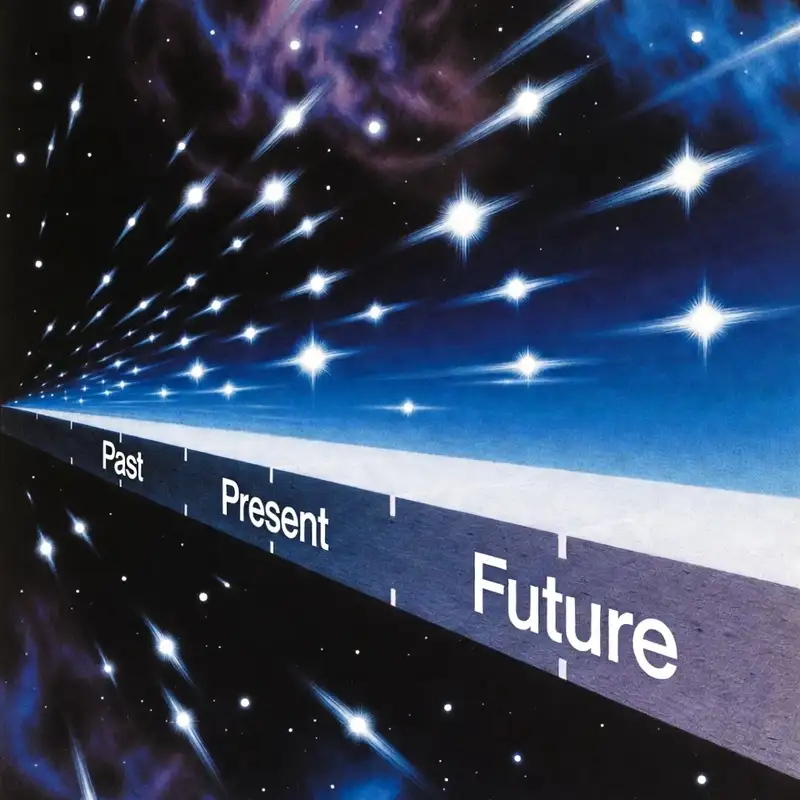
The Block Universe - When Time Stands Still
Is Time Just an Illusion? Understanding the Block Universe Theory
Welcome back to the Duke Tyner podcast, folks. I'm Summer, and today we're diving deep into one of the most mind-bending ideas in modern physics – the The Block Universe - When Time Stands Still. Now, I know what you're thinking: "Summer, you usually talk about music, Southern culture, maybe some philosophy. What are you doing talking about physics?" Well, stick with me, because this theory doesn't just change how we understand the cosmos – it fundamentally changes how we understand our own existence, our deaths, our choices, and the very nature of reality itself.
This is going to challenge everything you think you know about time. And fair warning – your brain might hurt a little by the end of this. But I promise you, it's worth it.
So grab your coffee, find a comfortable spot, and let's talk about what happens when past, present, and future all exist at once.
THE FOUNDATIONS - WHAT IS THE BLOCK UNIVERSE?]
Alright, let's start with the basics. What exactly is the Block Universe Theory?
Imagine for a moment that the entire history of the universe – from the Big Bang 13.8 billion years ago to whatever happens trillions of years in the future – all exists simultaneously as a single, unchanging four-dimensional structure. Not "will exist" or "did exist" – but EXISTS. Right now. All at once.
Think of it like a movie. When you watch a film, you experience it scene by scene, moment by moment. But the entire movie already exists on that disc or that file. The ending exists just as much as the beginning. The middle exists just as much as the credits. You experience it sequentially, but the whole thing is already there, complete and unchanging.
Now apply that to the entire universe. Your birth exists. Your childhood exists. This moment right now exists. Your death exists. Everything that will ever happen to you, to Earth, to the stars, to galaxies we'll never see – it all exists in what physicists call a four-dimensional "block" of spacetime.
In the Block Universe:
First: Past, present, and future are all equally real. The dinosaurs exist just as much as you do right now. Your great-great-grandchildren exist just as much as your grandparents do. It's all there, all at once, in the block.
Second: Time isn't flowing. It's not passing. It's not moving forward like a river carrying us along. Time is just another dimension, like length, width, and height. The whole thing is static, frozen, unchanging – like a sculpture.
Third: What we experience as the "flow of time" – that sensation of moving from past to present to future – is an illusion created by our consciousness. We're like a reader moving through a book, experiencing one page at a time, even though the entire book already exists.
Now, before you dismiss this as science fiction or philosophical mumbo-jumbo, understand this: The Block Universe Theory isn't some fringe idea. It's the dominant view among physicists and philosophers who study relativity. And it comes directly from Einstein's work.
Let me explain how we got here.
THE SCIENCE - RELATIVITY AND SPACETIME]
The Block Universe Theory has its roots in Albert Einstein's Special Theory of Relativity, published in 1905, and further developed by mathematician Hermann Minkowski.
Before Einstein, we thought of space and time as separate things. Space was the stage, time was the clock ticking in the background, and everyone agreed on what "now" meant. If I said "right now, at this very moment," we all knew what I was talking about – a universal present moment that everyone in the universe shared.
Einstein destroyed that idea.
Special Relativity showed us something shocking: There is no universal "now." The concept of "simultaneous" – two things happening at the same moment – depends on your frame of reference. Two observers moving at different speeds will fundamentally disagree about which events are happening at the same time.
Let me give you an example. Imagine you're standing on Earth, and your friend is on a spaceship traveling at near light speed. You both witness two events – let's say two supernovas exploding in different parts of the galaxy. You, standing still on Earth, might see them happen at the exact same moment. Your friend on the spaceship, moving at incredible speed, might see one happen years before the other.
Who's right? You're BOTH right. There is no absolute "now" that applies to everyone. Simultaneity is relative.
This is called the "relativity of simultaneity," and it's not a theory – it's a proven fact. We've tested it thousands of times with atomic clocks, particle accelerators, and GPS satellites. It's real.
Now here's where it gets wild: If there's no universal "now," then the idea that only the present moment exists doesn't make sense. Present for who? Present in which frame of reference?
Minkowski took Einstein's equations and showed that we should think of the universe not as three-dimensional space plus time, but as a single four-dimensional structure – spacetime. Three dimensions of space (length, width, height) and one dimension of time, all woven together into a single geometric object.
In Einstein's General Relativity, published in 1915, this idea goes even further. Spacetime becomes a fixed geometric structure determined by the distribution of mass and energy. Once you set the initial conditions and the laws of physics, the entire four-dimensional geometry is determined. The whole structure exists as a complete, unchanging block.
There's no privileged "present moment" moving through spacetime. There's no objective "now." The whole thing just... is.
THE LOAF OF BREAD ANALOGY
I know this is getting abstract, so let me give you a visual that really helps.
Imagine the universe as a giant loaf of bread. The entire loaf represents all of spacetime – every moment that has ever happened or will ever happen.
Now, take a knife and slice through that loaf. Each slice represents a moment in time from a particular observer's perspective. If you're standing still, you cut the loaf one way. If you're moving at high speed, you cut it at a slightly different angle.
Different observers – people moving at different speeds or in different directions – slice the loaf at different angles. That's the relativity of simultaneity. Your "now" slice and my "now" slice might cut through different events.
But here's the key: The whole loaf exists. The entire thing is there, complete and unchanging. Your consciousness moves through the loaf, experiencing one slice at a time, giving you the sensation of time flowing. But the flow is just your subjective experience – like reading a book page by page. The book doesn't change. The whole story already exists.
That loaf of bread? That's the Block Universe. And according to our best physics, that's what the universe is.
PHILOSOPHICAL IMPLICATIONS - DEATH, FATE, AND FREE WILL
Alright, so if the Block Universe Theory is true, what does that mean for us? For our lives, our choices, our deaths? This is where physics becomes philosophy, and where things get really personal.
ON DEATH:
In the Block Universe, you don't cease to exist when you die. Let me say that again: You don't cease to exist when you die.
Think about it. If all moments in time exist equally, then the you that exists right now – listening to this podcast – exists just as much as the you from ten years ago and the you from ten years in the future. When your physical body dies, that's just one temporal location in the block. But all the other temporal locations where you're alive still exist.
You, at age five, still exist in the block. You, at your wedding, still exist in the block. You, at your death, exist in the block. You, at every moment of your life, exists eternally in this four-dimensional structure.
Einstein himself found this idea deeply comforting. When his lifelong friend Michele Besso died in 1955, Einstein wrote a letter to Besso's family that included this famous line:
"Now he has departed from this strange world a little ahead of me. That signifies nothing. For us believing physicists, the distinction between past, present and future is only a stubbornly persistent illusion."
Think about what Einstein is saying. His friend's death "signifies nothing" because Besso still exists in the block – just at a different temporal location than Einstein currently experiences. The past, where they were young together, still exists. The moments they shared still exist. Nothing is truly lost.
From the perspective of the block, you are eternal. Not in the sense of living forever, but in the sense of permanently existing at your temporal location. The joy you felt as a child exists. The love you experienced exists. Your entire life, from birth to death, is a permanent feature of spacetime.
ON DETERMINISM AND FREE WILL:
Now this is where people get uncomfortable. If the future already exists in the block, doesn't that mean everything is predetermined? Doesn't that mean we have no free will?
This is probably the biggest philosophical debate surrounding the Block Universe. And honestly, there's no consensus.
Here's one perspective: Yes, if your future already exists in the block, then in some sense it's fixed. The choices you will make are already part of the structure. But – and this is important – those choices are still YOUR choices. The fact that they exist in the block doesn't necessarily mean they were forced or determined by something outside you.
Think of it this way: Right now, the year 2015 exists in the block. Did you have free will in 2015? Most people would say yes. You made choices, you decided things, you exercised agency. The fact that 2015 now exists as a fixed point in your past doesn't retroactively eliminate that agency.
The Block Universe Theory says the future is like that too – it exists, it's fixed, but it's fixed by the choices you make. The you in the future is still you, making decisions, exercising whatever form of will you have.
Other philosophers argue differently. Some say the block implies hard determinism – that free will is genuinely an illusion. Others propose compatibilism – that free will and determinism can coexist. Some reject the block entirely to preserve libertarian free will.
I'll be honest with you – I don't know the answer. Nobody does. But what I do know is this: Whether or not free will exists in the Block Universe, your subjective experience of making choices, of deliberating, of acting – that's real. That's your life. And that matters.
ON THE PASSAGE OF TIME:
In the Block Universe, the "flow" of time is purely psychological. There is no objective "now" sweeping through spacetime like the hand of a clock. The sensation you have of moving from past to present to future is created by your consciousness, your memory, your brain's way of processing information.
But here's the thing: Even if it's an illusion, it's a REAL illusion. It's your experience. And your experience is the only thing you directly know.
The philosopher Tim Maudlin put it well: Even if we live in a Block Universe, we still experience time. We still remember the past and anticipate the future. We still age. We still change. The phenomenology of time – the lived experience of it – remains unchanged, even if the metaphysics is different than we thought.
ALTERNATIVE VIEWS
Now, to be fair, the Block Universe Theory isn't the only game in town. There are competing views about the nature of time, and they're worth understanding.
PRESENTISM:
This is probably closest to our common-sense view. Presentism says that only the present exists. The past existed but doesn't anymore. The future will exist but doesn't yet. There's a real, objective "now" that moves through time, and that's the only thing that's real.
The problem? Presentism struggles with relativity. If there's no universal "now," how can we say only "now" exists? Presentism requires something like absolute time, which physics has abandoned.
GROWING BLOCK THEORY:
This is a middle ground. The Growing Block Theory says that the past and present exist, but the future doesn't. The block is real and fixed up to the present moment, but it's constantly growing as new "nows" are added to it.
This view tries to preserve both the reality of the past (which seems necessary for relativity) and the openness of the future (which seems necessary for free will and genuine change). But it faces its own problems: What counts as the "edge" of the block if there's no universal present?
THE BLOCK UNIVERSE:
This is the view that takes relativity most seriously. It bites the bullet and says: Fine, if relativity shows there's no universal present, then the whole structure must exist equally. Past, present, and future are all real in the same way.
Among physicists and philosophers of physics, this is currently the dominant view. Not universally accepted, but widely considered the most consistent with our best science.
OBJECTIONS AND RESPONSES
Let me address some common objections people have to the Block Universe Theory, because I know some of you are thinking these right now.
OBJECTION 1: "This doesn't FEEL true. I experience time flowing. I experience change happening."
Response: Absolutely you do. And the Block Universe Theory doesn't deny your experience. It says that your experience of time flowing is a feature of your consciousness moving through the block, not a feature of the block itself. Just like a movie feels like it's moving when you watch it, even though the film itself is static. Your subjective experience is real – it's just not revealing the underlying structure of spacetime.
OBJECTION 2: "If the future already exists, why bother doing anything? Why make plans or try to change things?"
Response: Because "you" in the block includes all your efforts, plans, and actions. The future that exists in the block is the future shaped by what you do. You can't opt out of making choices – your choices are part of the structure. The you in 2030 exists in part because of what the you in 2025 decides to do. Your agency is built into the block.
OBJECTION 3: "This eliminates God's freedom or contradicts religion."
Response: This depends on your theology. Some religious thinkers find the Block Universe compatible with their faith – God existing outside of time, seeing all moments at once. Others reject it. Honestly, questions about God's relationship to time have been debated by theologians for millennia, long before Einstein. The Block Universe adds a new wrinkle, but it doesn't necessarily resolve old theological debates.
OBJECTION 4: "Doesn't quantum mechanics show the future isn't determined?"
Response: Great question. Quantum mechanics does introduce genuine randomness (or apparent randomness – that's debated too). But randomness doesn't necessarily contradict the Block Universe. In a quantum block universe, the future might not be predictable, but it still exists. The block includes all the quantum outcomes – they're just probabilistic rather than deterministic. This gets into debates about the interpretation of quantum mechanics, which is a whole other rabbit hole.
WHAT THIS MEANS FOR HOW WE LIVE
So, let's bring this home. If the Block Universe Theory is true – if past, present, and future all exist equally in a static four-dimensional structure – how should that change how we live?
Honestly? I don't think it should change much at all in practical terms. But it might change how we think about certain things.
ON LOSS AND GRIEF:
If someone you love dies, the Block Universe Theory says they still exist – just at a different temporal location than you currently occupy. The moments you shared with them exist eternally in the block. In that sense, nothing is truly lost.
Does that make grief easier? I don't know. Grief is about the loss of future experiences, the severing of connection in your forward timeline. But there might be comfort in knowing that the love you shared isn't erased from existence – it's a permanent part of the structure of reality.
ON REGRET:
If you made mistakes in your past, those mistakes exist in the block. But so do all the moments when you grew, learned, and became better. Your past self is always there, but so is every version of you that came after. You're not erasing your past by growing – you're adding new layers to the block.
ON ANXIETY ABOUT THE FUTURE:
If the future already exists, then whatever happens is already part of the block. In a weird way, this can be comforting. Whatever you're anxious about – it's already resolved in the block. The outcome already exists. You can't change it by worrying. All you can do is move through it, experiencing it moment by moment.
Of course, this works both ways – if something good is going to happen, it's already there. If something bad is going to happen, it's already there too.
ON MEANING AND PURPOSE:
Does the Block Universe make life meaningless? Some people worry it does – if everything's fixed, what's the point?
But I'd argue the opposite. If your entire life exists eternally as part of the fundamental structure of spacetime, doesn't that make it deeply meaningful? You're not a fleeting accident. You're a permanent feature of reality. The choices you make, the love you give, the art you create, the good you do – all of it is eternal.
Your life isn't a vapor that disappears. It's carved into the fabric of spacetime forever.
That's not meaningless. That's profound.
THE MYSTERY REMAINS
Here's the thing, though. Even if the Block Universe Theory is true – even if our best physics points toward this static, four-dimensional structure – we still don't understand consciousness.
We don't know why you experience time flowing. We don't know why you experience "now." We don't know why you remember the past but not the future. We don't know what consciousness even IS, fundamentally.
The physicist Lee Smolin has argued that maybe time is more fundamental than we think, and that we need to go beyond relativity to understand it. The philosopher Dean Zimmerman has defended presentism despite the challenges from physics. Others are exploring new ideas altogether.
The truth is, we don't have all the answers. The Block Universe Theory is our best current interpretation of relativity, but it's not the final word. Physics is still evolving. Our understanding is still growing.
And that's okay. That's how science works. We go with the best explanation we have, while remaining open to new evidence and new ideas.
So where does this leave us?
The Block Universe Theory says that time doesn't flow, that past, present, and future all exist equally, and that our sense of temporal passage is an illusion of consciousness. It's supported by our best physics, particularly Einstein's relativity. It's the dominant view among physicists and philosophers of physics.
If it's true, it means your entire life – every moment from birth to death – exists eternally as part of the four-dimensional structure of spacetime. You don't cease to exist when you die. Nothing is truly lost. Everything that happened, is happening, and will happen is a permanent feature of reality.
It raises profound questions about free will, fate, meaning, and the nature of existence itself.
But here's what I keep coming back to: Even if we live in a Block Universe, we still experience life moment by moment. We still make choices. We still love and lose, hope and fear, create and destroy. We still have this miraculous, mysterious experience of being conscious beings aware of our own existence.
The structure might be fixed, but the experience is real.
And in the end, maybe that's what matters most.
Thanks for taking this journey with me into one of the deepest questions in physics and philosophy. I know it was heavy, but I hope it gave you something to think about.
If this episode messed with your head – good. Reality is stranger than we imagine, and it's worth wrestling with these big ideas.
Next time you look at an old photograph, remember: That moment still exists. You're not looking at something that's gone. You're looking at another location in the block, just as real as this moment right now.
And next time you worry about the future, remember: It's already there, waiting for you to experience it. All you can do is move through it with courage, love, and as much wisdom as you can muster.
I'm Summer, and I'll catch you on the next episode. Until then, keep exploring, keep questioning, and keep looking up at the stars – they're all out there, in the eternal block, waiting for us.