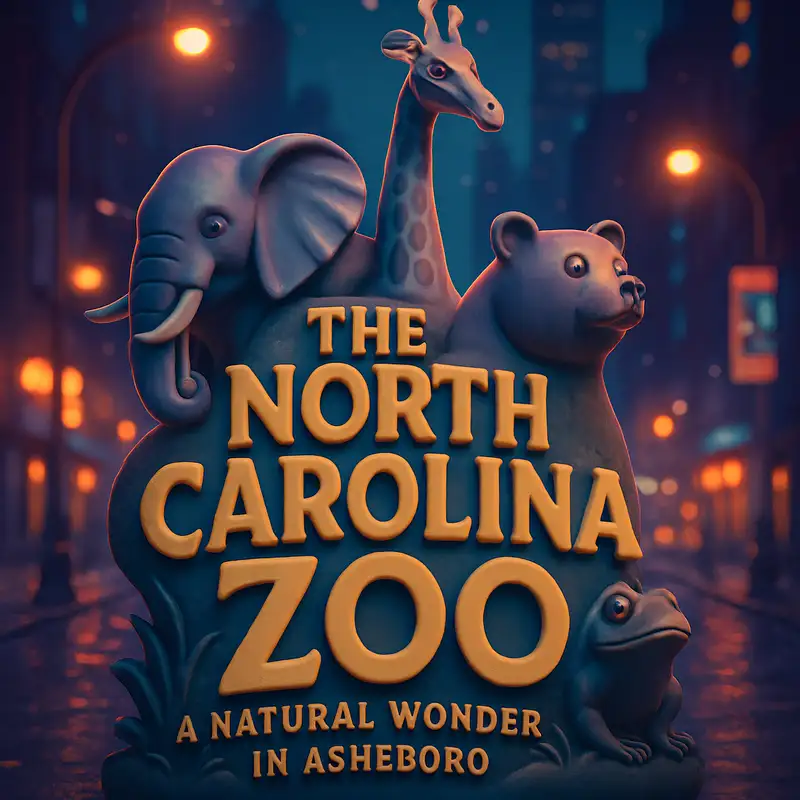
North Carolina Zoo - A Natural Wonder in Asheboro Exploring the Largest Natural Habitat Zoo in the World
The North Carolina Zoo - A Natural Wonder in Asheboro Exploring the Largest Natural Habitat Zoo in the World
Hey there, Red Dirt Radio family! Summer here, and today we're taking a little different kind of journey. We're not diving into ancient history or exploring mysterious lakes - though we'll definitely get back to that good stuff soon! Today, we're talking about one of North Carolina's absolute crown jewels, a place that brings joy to millions of people and serves as a sanctuary for some of the world's most incredible creatures.
Hey there, Red Dirt Radio family! Summer here, and today we're taking a little different kind of journey. We're not diving into ancient history or exploring mysterious lakes - though we'll definitely get back to that good stuff soon! Today, we're talking about one of North Carolina's absolute crown jewels, a place that brings joy to millions of people and serves as a sanctuary for some of the world's most incredible creatures.
I'm talking about the North Carolina Zoo in Asheboro, and y'all, this place is absolutely remarkable. Did you know it's the largest natural habitat zoo in the entire world? Not just in America - in the WORLD. And it's right here in our beautiful state, nestled in the Uwharrie Mountains in Randolph County.
So grab your favorite beverage, get comfortable, and let me take you on a journey through this amazing place. Whether you've been a hundred times, you've never been, or you didn't even know it existed, I promise you're going to learn something that'll make you appreciate the NC Zoo even more.
THE VISION AND THE BEGINNING
Let's start at the beginning, because the story of how the North Carolina Zoo came to be is actually pretty fascinating.
Back in the 1960s, North Carolina didn't have a major zoo. If you wanted to see exotic animals, you had to travel out of state. But a group of visionary leaders in the North Carolina General Assembly had an idea - what if we created a state zoo, something truly special that would set a new standard for how we care for and display animals?
In 1967, the North Carolina Zoological Park was officially authorized by the state legislature. But here's what makes this different from almost every other zoo in America - it was conceived, funded, and operated by the state government itself. North Carolina is actually one of only two states that owns and operates its own zoo. That's how committed our state was to making this happen.
The location they chose was absolutely perfect. Rather than building in a city like Raleigh or Charlotte, they selected a site in Randolph County, near the small town of Asheboro, right in the heart of the Uwharrie Mountains. This area has rolling hills, natural forests, streams, and diverse topography. The planners looked at this land and saw possibility - the chance to create something that had never been done before on this scale.
The vision was revolutionary for its time: instead of animals in cages and concrete enclosures, what if we created large, naturalistic habitats where animals could exhibit normal behaviors, where they'd have room to roam, and where visitors could see them in settings that closely resembled their native environments?
Construction began in the early 1970s, and this was no small undertaking. They were building on 1,371 acres initially - that would later expand to over 2,600 acres - and they were doing it in a way that worked with the natural landscape rather than bulldozing it flat.
The first section of the zoo to open was actually the North America region in 1974, with the official grand opening happening in 1976. Can you imagine being one of those first visitors, walking through these beautiful forests and seeing habitats unlike anything most zoos had created before?
The Africa section opened in 1979, and from that point on, the North Carolina Zoo has continued to grow, evolve, and set standards for animal care and conservation.
THE SIZE AND SCALE - WHAT MAKES IT THE LARGEST
Alright, so let's talk about what it actually means to be the "largest natural habitat zoo in the world," because the numbers are honestly mind-blowing.
The North Carolina Zoo sits on approximately 2,600 acres of land. To put that in perspective, that's over four square miles. It's bigger than some towns! But here's an important distinction - not all of that is developed zoo space. About 500 acres are developed for animal habitats and guest areas, while the rest remains natural forest and conservation land.
But even that 500 acres of developed space is massive. Most major city zoos are around 50 to 100 acres total. The famous Bronx Zoo in New York City, which is considered the largest urban zoo in the United States, is 265 acres. The beloved San Diego Zoo is about 100 acres. So even the developed portion of the NC Zoo is in a league of its own.
What really sets the NC Zoo apart is how that space is used. This isn't about cramming as many different species into small exhibits as possible. It's about giving animals the room they need to be animals.
Let me give you some examples that'll blow your mind:
The African elephant habitat is over 5 acres. Five acres! That's bigger than many entire zoo exhibits for all animals combined. The elephants can roam, forage, play in mud wallows, and interact as a herd the way they would in the wild.
The polar bear exhibit features a 37,000-gallon saltwater pool. These bears can actually swim, dive, and hunt for food in the water just like they would in the Arctic.
The chimpanzee habitat includes both indoor and outdoor spaces with climbing structures, trees, and areas where the chimps can be out of public view if they want privacy - something most zoo chimps never get.
When you visit the NC Zoo, you're not just walking past cages. You're hiking through the Uwharrie Mountains, experiencing different ecosystems, and catching glimpses of animals living in spaces that actually allow them to be themselves.
THE TWO CONTINENTS - AFRICA AND NORTH AMERICA
The NC Zoo is organized in a really unique and clever way - it's divided into two major continental regions: Africa and North America. And these aren't just themed areas with a few animals sprinkled around. These are complete, immersive experiences.
THE AFRICA REGION
Let's start with Africa, which is probably what most people think of first when they imagine a zoo. The Africa section opened in 1979 and includes several distinct habitat areas:
Forest Edge - This is where you'll find African elephants, which are absolutely majestic. Watching a herd of elephants interact is honestly a spiritual experience. These are highly intelligent, emotional, social animals, and seeing them in a space where they can actually behave naturally is incredible.
Forest Glade - Home to chimpanzees and various monkey species. The chimp habitat is particularly special because it allows these amazing primates to climb, swing, build nests, and interact with complex enrichment activities.
Gorilla habitat - The western lowland gorillas are among the most popular residents. These gentle giants are critically endangered in the wild, and watching them - especially when there are babies in the group - is unforgettable.
The Plains - This is where you get that classic African savanna experience. Zebras, giraffes, rhinos, ostriches, and various antelope species share this expansive habitat. On a beautiful day, looking out over the plains with giraffes grazing in the distance, you could almost forget you're in North Carolina.
Predators - Lions, of course! The lion habitat allows these magnificent cats space to lounge, patrol their territory, and occasionally roar in a way that you can feel in your chest.
There are also areas for smaller African animals, birds, and even an aviary where birds fly freely around you.
THE NORTH AMERICA REGION
Now, here's what I love about the North America section - it celebrates animals from our own continent, many of which people overlook because they're not "exotic." But these animals are absolutely fascinating!
Rocky Coast - This area features seals and sea lions with a massive pool system where you can watch them swim underwater through viewing windows. There are also polar bears - and let me tell you, watching a polar bear dive and swim is absolutely mesmerizing.
Streamside - This showcases animals from North American rivers and wetlands. River otters are some of the most playful, entertaining animals in the entire zoo. Alligators sun themselves along the banks. There are various waterfowl and wetland birds.
Prairie - American bison, which once roamed the continent in millions and were nearly hunted to extinction, graze peacefully. Prairie dogs have a whole town of burrows and are constantly entertaining with their social behaviors.
Forest habitats - Black bears, grizzly bears, red wolves (a species native to North Carolina that was saved from extinction through captive breeding programs), cougars, elk, bobcats, and more.
What I absolutely love about the North America section is that it reminds us we don't have to go to Africa or Asia to see incredible wildlife. We have amazing animals right here on our continent, and many of them are just as endangered and in need of conservation as exotic species.
THE EXPERIENCE - WHAT IT'S LIKE TO VISIT
Now let's talk about what it's actually like to visit the NC Zoo, because this is important - this is not your typical zoo experience!
First of all, you need to understand that you're going to be doing some serious walking. The distance between the Africa and North America regions is about a mile if you take the main connecting path. If you want to see everything and explore all the side trails and viewing areas, you're easily looking at 5 to 6 miles of walking.
This is not a leisurely stroll on flat pavement, either. Remember, the zoo was built into the natural topography of the Uwharrie Mountains. You're going up hills, down into valleys, through forests. It's beautiful, but it's also a workout!
My advice? Wear really comfortable walking shoes. Not cute sandals. Not dress shoes. Like, actual walking or hiking shoes. Your feet will thank you.
The good news is, the zoo provides tram service that runs between the two continents and makes stops at various points throughout the park. If you're visiting with small children, elderly family members, or if you just need a break, the tram is a lifesaver. There's an additional fee, but honestly, it's worth it.
Here's my recommendation for planning your visit: Unless you're an extremely ambitious walker in excellent shape, don't try to see everything in one day. You can, technically, but you'll be exhausted and you won't really get to enjoy it. Instead, consider focusing on one continent per visit, or plan for a two-day trip.
The zoo is open year-round - 364 days a year, only closed on Christmas Day - so you have lots of opportunities to visit.
Best times to visit:
Spring (March-May) - The weather is beautiful, flowers are blooming, and many animals are more active. Baby animals are often born in the spring, which is adorable. It can get crowded on nice weekends, though.
Fall (September-November) - This is actually my favorite time. The weather is gorgeous, the fall colors in the Uwharries are stunning, and animals tend to be very active in the cooler temperatures. Plus, school is back in session, so weekdays are less crowded.
Summer (June-August) - This is peak tourist season. It will be hot and humid - this is North Carolina, after all. Some animals, particularly those from cooler climates, may be less active during the heat of the day. They tend to retreat to shaded areas or go inside. But the zoo has misters, shade structures, and plenty of water fountains. If you go in summer, try to arrive early in the morning when it's cooler and animals are more active.
Winter (December-February) - You might think winter would be a bad time to visit a zoo, but actually, it has advantages! Many animals are MORE active in cold weather, especially the polar bears, Arctic foxes, and other cold-climate species. The zoo is much less crowded. And honestly, there's something magical about the zoo in winter. Just bundle up!
The zoo has several dining areas where you can grab lunch, snacks, and drinks. There are also numerous picnic areas if you want to bring your own food. There are playgrounds for kids, a carousel, and during warmer months, a dinosaur trail (which kids absolutely love).
CONSERVATION AND EDUCATION - THE DEEPER PURPOSE
Now, here's where the NC Zoo really shines, and it's something that makes me genuinely proud of our state. The NC Zoo isn't just about entertainment - though it absolutely is entertaining! - it's about conservation, research, and education.
Let's talk about some of the incredible conservation work happening at the zoo.
RED WOLF RECOVERY PROGRAM
This one is especially meaningful because red wolves are native to North Carolina. These beautiful canids once roamed throughout the southeastern United States, but by 1980, they were declared extinct in the wild. Completely gone from their natural habitat.
The NC Zoo became a critical partner in the Red Wolf Species Survival Plan, a captive breeding program designed to save the species. Wolves from the zoo have been released into the wild in eastern North Carolina, particularly in the Alligood Point area. It's been challenging - the wild population faces threats from habitat loss, hunting, and hybridization with coyotes - but the fact that red wolves exist at all today is because of programs like the one at our zoo.
When you see the red wolves at the NC Zoo, you're looking at animals that represent hope for an entire species.
AFRICAN ELEPHANT CONSERVATION
The zoo partners with conservation organizations working to protect African elephants in the wild. This includes anti-poaching efforts, habitat protection, and community education programs in African countries. The zoo also conducts research on elephant behavior, communication, and health that helps inform conservation strategies worldwide.
POLLINATOR GARDENS AND MONARCH CONSERVATION
Throughout the zoo, you'll notice beautiful gardens specifically designed to support pollinators - bees, butterflies, hummingbirds, and more. The zoo has a significant monarch butterfly conservation program, including tagging monarchs to track their incredible migration patterns.
This might seem small compared to saving elephants or wolves, but pollinators are critical to our ecosystems and food supply. The fact that the NC Zoo dedicates resources to this shows their commitment to conservation at all levels.
SUSTAINABLE PRACTICES
The zoo has implemented numerous sustainable practices:
- Solar panels to reduce energy consumption
- Composting programs that turn animal waste and plant material into usable compost
- Water conservation and recycling systems
- Sustainable building practices in new construction
- Educational programs teaching visitors about sustainability
EDUCATION PROGRAMS
The zoo offers incredible educational opportunities:
- School field trip programs aligned with curriculum standards
- Summer camps for children
- Behind-the-scenes tours
- Keeper talks throughout the day where staff share information about animals
- Special events focused on conservation themes
- Training programs for future zookeepers and wildlife professionals
The NC Zoo School is particularly cool - it's an actual program for high school students interested in careers in zoology, veterinary medicine, or wildlife conservation.
THE ANIMALS - SOME SPECIAL RESIDENTS
Let me tell you about some of the amazing animals you can meet at the NC Zoo. I could honestly talk about this for hours, but I'll share some highlights.
THE ELEPHANTS
The African elephant herd is absolutely magnificent. African elephants are the largest land animals on Earth, and watching them is humbling. They're incredibly intelligent - they mourn their dead, they recognize themselves in mirrors, they use tools, they have complex social structures.
The matriarch of the herd leads with wisdom earned over decades. The younger elephants play and learn. If you're lucky enough to be there during feeding time and see them use their trunks with such precision and power... it's just amazing.
THE POLAR BEARS
Watching polar bears swim is absolutely mesmerizing. These massive predators are surprisingly graceful in the water. They dive, they play, they hunt for enrichment items the keepers put in the pool. The underwater viewing area allows you to see them in a way you'd never experience in the wild.
Polar bears are also facing serious threats in the wild due to climate change and melting sea ice. Seeing them at the zoo is both joyful and sobering - a reminder of what we stand to lose if we don't take action on environmental issues.
THE CHIMPANZEES
If you want to see yourself in another species, watch the chimps. They share about 98% of our DNA, and it shows. They use tools, they have complex social politics, they communicate with each other, they laugh, they comfort each other, they scheme and plan.
The chimp habitat at the NC Zoo allows for really great viewing, and if you go during one of the keeper talks, you'll learn about each chimp's personality. They're individuals with preferences, friendships, quirks, and histories.
THE RED WOLVES
As I mentioned earlier, these are special because they're a conservation success story. They're smaller than gray wolves but larger than coyotes, with beautiful reddish-tan fur. They're incredibly intelligent and family-oriented.
Seeing them at the zoo knowing that their relatives are (hopefully) thriving again in North Carolina wilderness areas makes the experience even more meaningful.
THE GRIZZLY BEARS
The grizzly bear habitat is impressively large, with a pool, streams, and lots of natural vegetation. These bears are massive - adult males can weigh 600-800 pounds - and watching them is both thrilling and a little bit frightening, even with barriers in place.
Grizzlies once ranged across much of western North America but have been eliminated from most of their historic range. Seeing them helps us understand what we've lost and what's worth protecting.
THE LIONS
There's something about hearing a lion roar that just hits differently. It's primal. The lion pride at the NC Zoo includes males with magnificent manes and females who are the real hunters and leaders of the group.
Lions are listed as vulnerable in the wild, with populations declining due to habitat loss and conflict with humans. Every lion birth at the zoo is part of a carefully managed breeding program designed to maintain genetic diversity.
BEHIND THE SCENES - THE PEOPLE WHO MAKE IT HAPPEN
Let's talk about the people who make the NC Zoo what it is, because this place doesn't run on magic - it runs on the dedication of hundreds of passionate professionals.
ZOOKEEPERS
The zookeepers are the heart and soul of the zoo. These folks are up before dawn, preparing meals for their animals, cleaning habitats, monitoring health, providing enrichment, and constantly observing behavior.
Being a zookeeper is not a glamorous job, despite what you might think. It's physically demanding - lots of lifting, cleaning, working in all weather conditions. It doesn't pay as well as many careers requiring similar education levels. But the people who do it are absolutely passionate about animal welfare.
They know each animal as an individual. They can tell you who's having a good day, who's feeling off, who's best friends with whom, who's a troublemaker, who's shy. They develop deep bonds with the animals in their care.
VETERINARIANS AND VET STAFF
The zoo has a full veterinary hospital on-site with state-of-the-art equipment. The vet staff provides routine medical care, emergency treatment, performs surgeries, manages reproductive programs, and conducts research.
Imagine being a vet who has to anesthetize a grizzly bear for a dental exam, or perform ultrasound on a pregnant elephant. These professionals are dealing with patients that can't tell them what hurts and who might weigh several tons!
HORTICULTURE STAFF
The grounds at the NC Zoo are absolutely beautiful, and that's thanks to the horticulture team. They maintain the gardens, create pollinator habitats, ensure that the plants in animal habitats are appropriate and non-toxic, and design landscapes that are both beautiful for visitors and beneficial for wildlife.
EDUCATORS
The education staff develop programs, lead school groups, conduct keeper talks, create interpretive signage, and work to inspire the next generation of conservationists. They're passionate about helping people understand and care about wildlife.
MAINTENANCE AND OPERATIONS
Behind the scenes, there's a whole team keeping everything running - maintaining pathways, fixing exhibits, managing water systems, handling waste, ensuring visitor safety, and a thousand other tasks that most people never think about.
All of these people work together to create the experience that millions of visitors enjoy every year.
PLANNING YOUR VISIT - PRACTICAL TIPS
Alright, so let's say I've convinced you that you need to visit the NC Zoo - and honestly, if you live in North Carolina and you've never been, what are you waiting for? Here are my practical tips for making the most of your visit.
BEFORE YOU GO
Check the weather - Seriously, this matters. The zoo is almost entirely outdoors, and you'll be walking for hours. Dress appropriately. In summer, wear light, breathable clothing, sunscreen, and a hat. In winter, layer up. In spring and fall, be prepared for variable conditions.
Buy tickets online - You can save a little money and skip the ticket line by purchasing online in advance.
Download the zoo map - It's available on the website and will help you plan your route. The zoo is huge, and having a map really helps.
Check the daily schedule - The zoo posts daily keeper talks and feeding times. If you want to catch specific animals at their most active or learn from the experts, plan around these times.
WHAT TO BRING
Comfortable walking shoes - I cannot stress this enough!
Water bottles - There are refill stations throughout the zoo. Staying hydrated is crucial, especially in summer.
Snacks - While there are dining options, having your own snacks can save money and time.
Stroller or wagon for small kids - The walking is extensive, and little legs get tired.
Binoculars - Optional, but helpful for seeing animals that might be at a distance in the large habitats.
Camera - You're going to want photos!
Rain gear - If there's any chance of rain, bring ponchos or umbrellas.
AT THE ZOO
Arrive early - Animals are typically most active in the morning. Plus, you'll beat some of the crowds.
Start with the continent you're most interested in - If you get tired and don't finish, at least you saw your priorities.
Take breaks - There are benches and rest areas throughout. Don't try to power through without resting.
Attend keeper talks - These are free with admission and provide incredible insights.
Visit the gift shop - Proceeds support the zoo, and there's some really cool stuff!
Be patient - Animals don't perform on demand. Sometimes they're sleeping. Sometimes they're behind a tree. That's okay. They're living their lives.
Respect the animals - Don't bang on glass, don't try to get their attention by yelling, don't throw anything into habitats. Be a respectful visitor.
SPECIAL EXPERIENCES
The zoo offers some amazing special experiences for additional fees:
Behind-the-scenes tours - Get up close with keepers and learn about animal care.
Close encounters - Depending on availability, you might be able to get close to certain animals with keeper supervision.
Roar & Snore - This is an overnight camping experience at the zoo. You sleep in tents on zoo grounds and get special nighttime tours. It's incredibly popular and books up fast!
Birthday parties and special events - The zoo hosts private events.
MEMBERSHIP
If you think you'll visit more than once or twice a year, a membership is absolutely worth it. Members get unlimited visits, discounts in the gift shop and at dining locations, early entry to special events, and the satisfaction of knowing they're supporting conservation.
COMPARISON TO OTHER ZOOS - WHAT MAKES NC ZOO UNIQUE
I've been lucky enough to visit quite a few zoos across the country, and each one has its own character and strengths. So let me give you some perspective on how the NC Zoo compares.
VS. SAN DIEGO ZOO
The San Diego Zoo is probably the most famous zoo in America, and it's absolutely wonderful. It has an incredible collection of animals - over 650 species! - and it's beautifully maintained. But it's also only about 100 acres, so it's much more compact.
What the NC Zoo has that San Diego doesn't is space. Animals at the NC Zoo have habitats that are genuinely large and naturalistic. San Diego has made amazing use of limited space, but there's just no comparison in terms of room for animals to roam.
VS. BRONX ZOO
The Bronx Zoo in New York is the largest urban zoo in the United States at 265 acres, and it's been around since 1899. It's historic, it's significant, and it houses an amazing array of animals.
But the NC Zoo is nearly twice the size in developed area and sits on exponentially more total land. Also, the Bronx Zoo is, by necessity, in an urban environment. The NC Zoo is in the middle of beautiful, natural North Carolina countryside.
VS. SAN DIEGO ZOO SAFARI PARK
This is probably the most similar to the NC Zoo. The Safari Park (formerly called the Wild Animal Park) sits on about 1,800 acres and features large, open habitats with animals roaming in herds. It's absolutely fantastic.
The Safari Park and the NC Zoo share a similar philosophy about naturalistic, spacious habitats. Both are worth visiting!
WHAT MAKES NC ZOO SPECIAL
Here's what I think makes the NC Zoo truly unique:
1. State-owned and operated - This is our zoo. It belongs to the people of North Carolina. That's special.
2. The setting - Being in the Uwharrie Mountains creates an experience you can't get at urban zoos.
3. The North America section - While most major zoos have some North American animals, the NC Zoo dedicates an entire region to showcasing our continent's wildlife with equal importance to exotic species.
4. Affordability - Compared to many major zoos, admission is quite reasonable. The state subsidizes it to keep it accessible.
5. The conservation focus on local species - The red wolf program, for example, is directly relevant to North Carolina.
6. Room to grow - With 2,600 acres, the zoo has space for future expansion and development that most zoos could only dream of.
THE FUTURE - WHAT'S COMING
The NC Zoo is not resting on its laurels. There are exciting developments planned for the future!
UPCOMING EXPANSIONS
The zoo has long-range plans that include:
Asia region - Yes, you heard that right! Plans have been in the works for years to add a third major continental region featuring Asian animals. This would include tigers, orangutans, Asian elephants, pandas (hopefully!), red pandas, and many more species. This would be a massive expansion and would take years to complete, but it's in the planning stages.
South America section - There's also discussion of eventually adding South American habitats.
Expanded North America areas - Continued development of existing regions with new habitats and species.
CONTINUED CONSERVATION WORK
The zoo is committed to expanding its conservation partnerships, both locally and globally. This includes:
- Increased support for wildlife corridors in North Carolina
- Partnerships with African conservation organizations
- Expanded breeding programs for endangered species
- More robust education and outreach
FACILITY IMPROVEMENTS
Ongoing improvements to visitor facilities, including:
- Updated dining options
- Enhanced accessibility for people with disabilities
- More efficient tram systems
- Better interpretation and education displays
- Sustainable infrastructure upgrades
TECHNOLOGY INTEGRATION
Like many modern zoos, the NC Zoo is exploring ways to use technology to enhance the visitor experience:
- Mobile apps with GPS-guided tours
- Augmented reality experiences
- Live animal cams that people can watch from home
- Virtual education programs
WHY THIS MATTERS
So why does all of this matter? Why dedicate an entire episode to talking about a zoo?
Because the North Carolina Zoo represents something really important. It represents our commitment as a state to conservation, to education, to treating animals with dignity and respect, and to inspiring future generations to care about the natural world.
In a time when so many species are facing extinction, when habitats are disappearing, when climate change threatens ecosystems worldwide, places like the NC Zoo matter more than ever.
Yes, the zoo is fun. Yes, it's entertaining. Yes, it's a great place to take your family for a day out. But it's also so much more than that.
It's a place where children fall in love with animals and decide to become conservationists. It's a place where captive breeding programs save species from extinction. It's a place where research happens that improves animal welfare worldwide. It's a place where people from all walks of life can connect with nature, even if they live in cities and rarely get to experience wildlife otherwise.
The NC Zoo is a testament to what we can accomplish when we commit resources and passion to a worthy cause. It started with a vision in 1967, and it's grown into something that makes North Carolina proud.
If you've never been, I genuinely encourage you to go. Take a day, take two days, explore, learn, and let yourself be amazed by the incredible diversity of life on our planet.
If you have been, go again! The zoo is constantly evolving, and there's always something new to see.
And if you're not in a position to visit right now, consider supporting the zoo through their membership program or donations. Every little bit helps support the animals and the conservation work.
This has been Summer with Red Dirt Radio, exploring the wonders of the North Carolina Zoo in Asheboro - the largest natural habitat zoo in the world, and one of our state's greatest treasures.
Thank you so much for listening, friends. If you enjoyed this episode, please share it with someone who loves animals or who might be planning a trip to the zoo. Leave us a comment telling me about your favorite NC Zoo memory, or what animal you most want to see.
And remember - we share this planet with incredible creatures who deserve our respect, our protection, and our wonder.
Until next time, this is Summer saying: stay curious, stay compassionate, and never stop exploring the amazing world around us.
Red Dirt Radio, signing off.