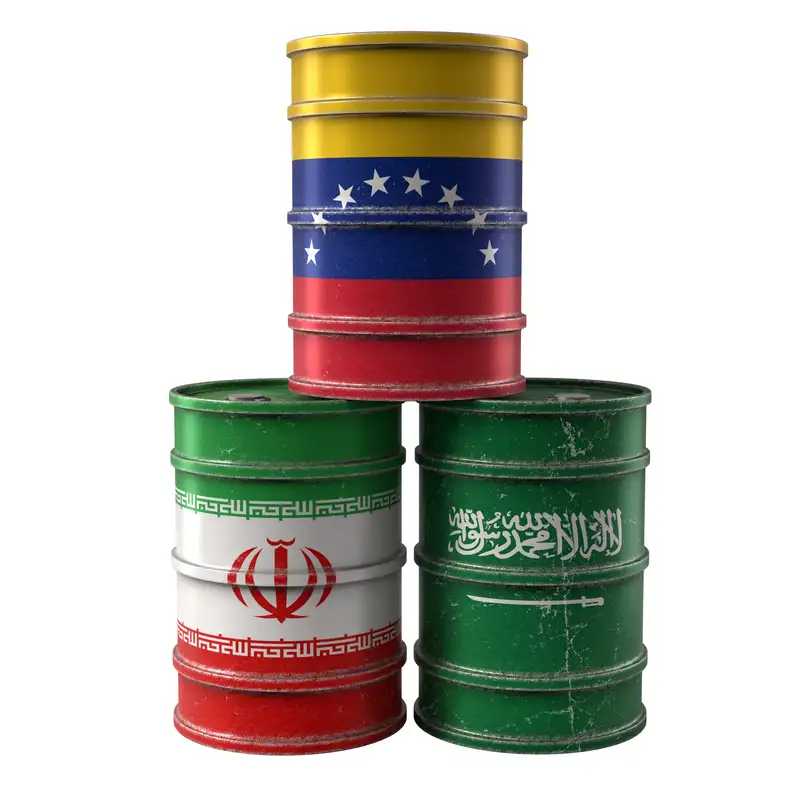
WHAT'S HAPPENING IN IRAN AND VENEZUELA - TWO CRISES UNFOLDING
Hey everyone, Summer here.
Today we're talking about two major international stories that are unfolding right now—situations in Iran and Venezuela that are dominating headlines and raising serious questions about what happens next.
I want to be upfront: these are complex, developing situations involving real people in real danger. I'm going to do my best to explain what's happening based on current reporting, but things are changing rapidly and there's a lot we still don't know.
What's clear is that both Iran and Venezuela are experiencing significant upheaval right now, and the international community—especially the United States—is deeply involved in both situations.
Let's break down what's happening and why it matters.
PART ONE: IRAN - PROTESTS AND CRACKDOWN
Let's start with Iran, where mass protests have been raging for almost two weeks now.
How the Protests Started
The Iranian protests began on December 28th, 2025, in Tehran's Grand Bazaar—the historic commercial center of Iran's capital. The immediate trigger was economic: Iran's currency, the rial, has collapsed to over 1.4 million to one U.S. dollar. Inflation has exceeded 42 percent. Basic necessities have become unaffordable.
Shopkeepers in the bazaar shut down their businesses in protest—merchants who depend on being open chose to close because the economic situation had become untenable.
How It's Evolved
What started as economic protests quickly evolved into broader political demonstrations. The protests have now spread to over 130 cities across all 31 of Iran's provinces.
People aren't just protesting prices anymore. They're chanting slogans against Supreme Leader Ayatollah Ali Khamenei, calling for political change, and in some cases expressing support for the monarchy that was overthrown in Iran's 1979 Islamic Revolution.
The Government Response
Iran's government has responded with severe force. According to human rights organizations:
- At least 50-60 people have been killed
- Over 2,000 people have been arrested
- Security forces have used live ammunition, tear gas, and beatings against largely peaceful protesters
- The government shut down internet access nationwide on Thursday, cutting Iran off from the world
That internet blackout is significant—it prevents images of violence from getting out and makes it harder for protesters to organize.
The International Dimension
President Trump has repeatedly warned Iran against killing protesters, threatening U.S. intervention if the violence continues. Given recent U.S. actions elsewhere, these threats are being taken seriously.
Iran's Supreme Leader has accused protesters of being "mercenaries for foreigners" working on behalf of Trump and the United States. The government frames the protests as foreign-backed rather than legitimate domestic unrest.
The exiled son of Iran's last Shah, Reza Pahlavi, has been calling for protests and positioning himself as a potential leader if the current government falls, though Trump has said he won't back any specific successor.
Why This Is Happening
Iran has been under intense pressure from multiple directions:
- Severe economic sanctions from the U.S. and UN over its nuclear program
- A 12-day war with Israel in June 2025 that damaged its military infrastructure
- The collapse of its "Axis of Resistance" regional allies
- Years of corruption and economic mismanagement
All of this has created conditions where ordinary Iranians can't afford basic necessities, and frustration has boiled over into the streets.
PART TWO: VENEZUELA - INTERVENTION AND UNCERTAINTY
Now let's talk about Venezuela, where an even more dramatic situation has unfolded.
What Happened - U.S. Military Action
According to reports from January 3rd-4th, 2026, the United States conducted military strikes on Venezuela and captured President Nicolás Maduro and his wife, flying them to New York to face drug trafficking charges.
This was a lightning military operation—explosions in Caracas early Saturday morning, strikes on military facilities, and the extraction of Venezuela's president.
President Trump announced that the U.S. would temporarily "run" Venezuela until a transition to new leadership could occur, though exactly what that means on the ground remains unclear.
The Justification
The U.S. has had outstanding indictments against Maduro for years, alleging he partnered with drug trafficking organizations to transport cocaine into the United States. The Trump administration framed this as a law enforcement operation targeting a narco-terrorist regime.
Maduro has repeatedly denied these accusations and claimed the U.S. simply wants access to Venezuela's vast oil reserves.
The Aftermath
Venezuela's Vice President, Delcy Rodríguez, was reportedly "sworn in" as president, though she demanded Maduro's release and called him the rightful leader. The situation on the ground in Venezuela remains chaotic and unclear.
Neighboring countries like Brazil and Colombia have condemned the U.S. action, with Brazilian President Lula calling it an "unacceptable" violation of sovereignty that crosses a dangerous line.
Venezuela temporarily closed its border with Brazil, and there are concerns about potential refugee flows if the situation deteriorates further.
International Reactions
The international response has been largely critical:
- Brazil, Mexico, Colombia condemned the strikes as violations of sovereignty
- Russia and China strongly opposed the action
- The UN Secretary-General called it a "dangerous precedent" that doesn't respect international law
- European leaders have been more cautious, supporting democratic transition while not explicitly endorsing the military action
The Precedent
What makes the Venezuela situation particularly significant is the precedent it sets. This is direct military intervention to remove a sitting head of state and capture him for prosecution in the United States.
Whether you think Maduro deserved to be removed or not, the method raises serious questions about international law, sovereignty, and what happens when powerful countries decide to enforce their will militarily.
PART THREE: THE CONNECTIONS AND IMPLICATIONS
So why am I talking about Iran and Venezuela together? Because these situations are connected in important ways.
U.S. Foreign Policy Posture
Both situations show an extremely aggressive U.S. foreign policy approach under the Trump administration. The willingness to use military force, to intervene directly in other countries, to threaten leaders who oppose U.S. interests.
Trump's warnings to Iran explicitly reference Venezuela—essentially saying "we just did this there, we can do it here too." Whether that's a bluff or a genuine threat, it's unprecedented language from a U.S. president.
Sovereignty vs. Intervention
Both situations raise fundamental questions about national sovereignty. Does the international community have the right—or responsibility—to intervene when governments harm their own people or break international law?
That's a question without easy answers. Some argue intervention is necessary to stop human rights abuses or criminal regimes. Others argue that sovereignty must be respected and that powerful countries using military force sets dangerous precedents.
The Human Cost
In both Iran and Venezuela, real people are caught in the middle. Iranians protesting economic conditions are being killed in the streets. Venezuelans face uncertainty about their country's future and potential instability.
Whatever your politics, whatever you think about U.S. intervention or regime change—there are human beings whose lives are being profoundly affected by these events.
What Happens Next?
For Iran: Will the protests continue and grow? Will the government successfully suppress them through violence? Will there be international intervention? All of these outcomes remain possible.
For Venezuela: Who actually governs the country now? Will there be elections? How long will U.S. involvement last? Will the situation stabilize or descend into chaos? Nobody knows.
Both situations could change dramatically in the coming days or weeks.
CONCLUSION
So that's what's happening in Iran and Venezuela right now—two countries experiencing upheaval, two situations where U.S. foreign policy is playing a major role, two unfolding stories with uncertain outcomes.
These are complex situations without simple heroes or villains. There are legitimate concerns about human rights, about sovereignty, about the use of military force, about what happens when governments fail their people.
I encourage you to follow reputable news sources for updates as these situations develop. Organizations like Amnesty International and Human Rights Watch are documenting what's happening on the ground. Major news outlets are reporting from the region.
And remember that behind every headline are real people—families, communities, individuals whose lives are being shaped by these events in ways we might never fully understand from a distance.
This is Summer, and you've been listening to Red Dirt Radio's breakdown of what's happening in Iran and Venezuela.
Stay informed. Stay thoughtful. And remember that the world is complicated, and understanding requires both facts and empathy.
Take care, everyone.