THE BROWN MOUNTAIN LIGHTS - NORTH CAROLINA'S GLOWING MYSTERY
Hey everyone, Summer here.
And today we're diving into one of the most fascinating mysteries in North Carolina—and honestly, one of the weirdest things you'll ever hear about. We're talking about the Brown Mountain Lights.
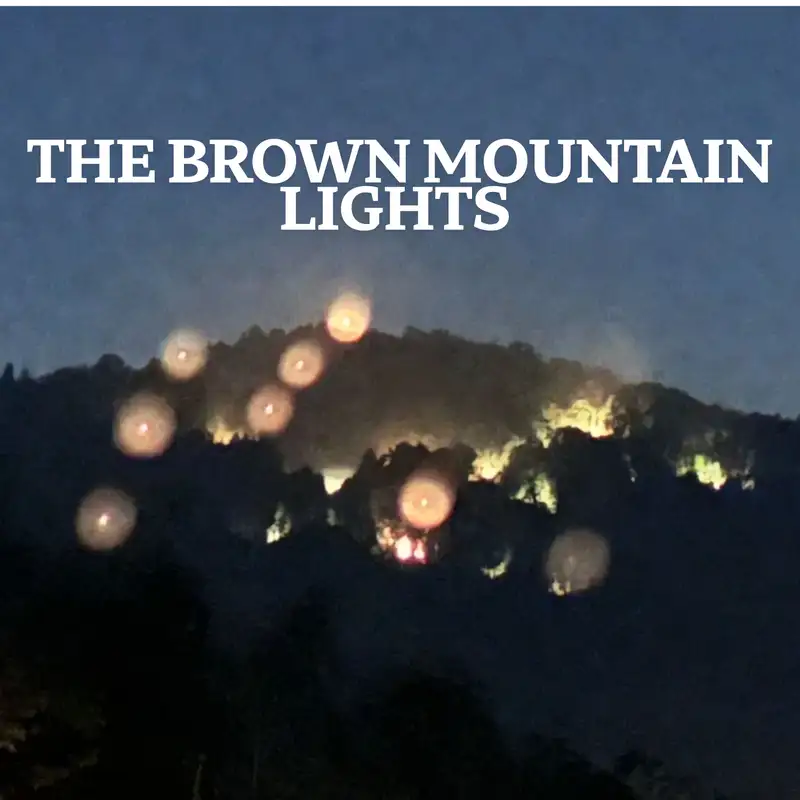
If you've never heard of them, imagine this: mysterious glowing orbs that appear over a mountain ridge in the Blue Ridge Mountains. White lights, red lights, blue lights—floating, hovering, darting around unpredictably, then disappearing and reappearing somewhere else.
And here's the thing that makes this genuinely strange: people have been seeing these lights for over a century. Actually, much longer than that—Cherokee legends talked about them before Europeans even arrived in North Carolina. The U.S. Geological Survey has investigated them. Twice. Scientists have proposed theories. None of them fully explain what people are seeing.
So today, we're exploring the Brown Mountain Lights—what they are, what they might be, the folklore surrounding them, and why this mystery has captivated the American South for generations.
Let's get weird. Let's get into it.
PART ONE: WHAT ARE THE BROWN MOUNTAIN LIGHTS?
First, let's establish what we're actually talking about here.
Brown Mountain is a low ridge in Burke County, North Carolina, sitting in the Blue Ridge Mountains between Morganton and Linville. It's not a dramatic peak—it's actually pretty modest as mountains go. But what happens above and around this mountain? That's where things get interesting.
The Phenomenon
The Brown Mountain Lights are mysterious luminous orbs—glowing spheres of light that appear near the mountain. They show up in different colors: white, red, blue, sometimes combinations. And they don't just sit there. They move.
Witnesses describe these lights rising above the mountain ridge, hovering in place, then suddenly darting around in erratic patterns. They'll disappear completely, then reappear somewhere else. They vary in size—sometimes small pinpoints of light, sometimes larger glowing masses that are clearly visible from miles away.
What makes this particularly compelling is the consistency of reports across time. People aren't describing vaguely seeing something weird in the dark. They're describing specific, observable phenomena: distinct colored lights, movement patterns, predictable viewing locations.
Historical Sightings
Here's where it gets really interesting. These aren't modern sightings that could be easily explained by cars or planes or drones.
Cherokee legends spoke of these mysterious lights long before European settlement. The indigenous people who lived in these mountains for thousands of years had stories about these illuminations. That's not recent history—that's ancient oral tradition.
The first documented written account came in 1771. Think about that date. 1771. No cars. No electric lights. No trains. No highways. Just wilderness, mountains, and whatever these lights actually are.
By the early 20th century, the lights had become famous enough that the U.S. Geological Survey decided to investigate. They studied the phenomenon in 1913 and then again in 1922. Government scientists, official investigations, attempting to find a rational explanation.
And you know what they concluded? They couldn't definitively explain it.
When scientists investigate something twice and still can't give you a clear answer, that's when you know you've got a genuine mystery.
PART TWO: THE THEORIES - WHAT COULD THEY BE?
So if scientists can't explain the Brown Mountain Lights, what are the leading theories? What MIGHT be causing this?
Let's go through the main scientific explanations that have been proposed:
Ball Lightning
This is a rare atmospheric electrical phenomenon—basically, glowing spheres of electricity that appear during thunderstorms, float around, and then disappear. They're real, they're documented, but they're extremely rare and not well understood.
Could ball lightning account for some of the Brown Mountain Light sightings? Maybe. Especially sightings that happen during or after storms. But ball lightning doesn't explain sightings on clear nights, and it doesn't explain the historical consistency of these lights appearing in this specific location.
Swamp Gas or Marsh Gas
This is the classic "rational explanation" for mysterious lights—methane emissions from decaying organic matter in swamps can spontaneously combust, creating brief flashes of light.
The problem with this theory for Brown Mountain? There aren't significant swamps or marshes in that area. The Blue Ridge Mountains are rocky, forested terrain. So unless there's some hidden methane source we don't know about, this doesn't hold up well.
Distant Light Refraction
This is one of the more popular scientific explanations: headlights from highways, trains, or distant towns being refracted through layers of atmosphere, making them appear as mysterious floating lights.
And this could explain some modern sightings, sure. Atmospheric refraction is real. Light can bend and create optical illusions.
But here's the problem: this doesn't explain sightings from 1771, or Cherokee legends from before European contact. There were no car headlights. No train lights. No electric street lamps. If people were seeing these lights centuries ago, refraction of man-made light sources can't be the answer.
Piezoelectric Effects
This is a fascinating theory. Quartz-bearing rocks, when subjected to tectonic stress, can generate electromagnetic fields. Essentially, the earth's crust moving and putting pressure on certain types of rock could create electrical phenomena visible as light.
The Blue Ridge Mountains do have quartz deposits. Tectonic activity does occur. So this is scientifically plausible. And it would explain why the lights appear in this specific location—if there's something unique about the geology here, it could create unique electrical effects.
But piezoelectric effects haven't been definitively proven to create sustained, visible light phenomena like what people describe seeing. It's theoretical.
St. Elmo's Fire
This is atmospheric electrical discharge—the same phenomenon that creates glowing halos around ship masts during storms. It's real, it's well-documented, it can create visible light.
Could St. Elmo's Fire happen on mountain ridges? Possibly. But it typically requires specific weather conditions and doesn't explain the variety of colors, sizes, and movement patterns reported with the Brown Mountain Lights.
The Problem with All These Theories
Here's the thing: each of these theories could explain SOME of the sightings. But none of them explain ALL of the reported characteristics.
The lights appear in different weather conditions—clear nights, after rain, during storms. They appear in different colors. They move in ways that don't match simple refraction or atmospheric phenomena. And they've been seen for centuries, which rules out modern explanations.
So what are they? Honestly, we still don't know. And that's what makes this compelling.
PART THREE: THE FOLKLORE AND LEGENDS
Science might not have answers, but folklore certainly has stories. And the Brown Mountain Lights have inspired some beautiful, haunting legends.
The Cherokee Warrior
One popular tale involves a Cherokee warrior eternally searching for his lost love. The legend says he's searching the mountains with a torch, and the lights people see are his ongoing quest across the centuries.
It's a romantic, tragic story—the kind of folklore that attaches to unexplained natural phenomena. Love transcending death, eternal searching, the idea that strong emotion can leave a mark on the physical world.
Confederate Soldiers
Another legend speaks of ghostly Confederate soldiers still searching for fallen comrades on the battlefield. The lights represent their lanterns as they continue their search, unable to rest until all their brothers are accounted for.
This story connects the lights to Civil War history and the idea that traumatic events leave spiritual echoes. Whether you believe in ghosts or not, it's a compelling narrative.
Why Folklore Matters
These legends aren't scientific explanations, but they're important because they show how communities make sense of the unexplainable. When something strange happens repeatedly in your region, stories emerge to give it meaning.
The folklore surrounding the Brown Mountain Lights has made them a significant part of Appalachian culture. They're not just a curiosity—they're woven into the regional identity, part of what makes this area unique and mysterious.
PART FOUR: EXPERIENCING THE LIGHTS - WHERE AND WHEN
So let's say you want to see the Brown Mountain Lights for yourself. Where do you go? What do you need to know?
Best Viewing Locations
There are two primary spots that offer the best chances:
Wiseman's View - This is a scenic overlook in the Pisgah National Forest with dramatic views of the Linville Gorge. It's a beautiful location even if you don't see the lights. But it does require a short hike to reach the overlook, so it's not totally accessible for everyone. If you're up for the walk, though, this gives you an excellent vantage point.
Brown Mountain Overlook - This is located along NC Highway 181 between Morganton and Linville. It's a roadside pull-off, which makes it the most accessible viewing location. You can literally pull your car over and look. This is why it's popular with both casual visitors and dedicated light-watchers.
When to Go
Here's the frustrating part: the lights don't appear on any predictable schedule. You can't plan a trip for "Brown Mountain Lights viewing on Saturday at 8 PM" because they don't work that way.
Sightings are a matter of patience and luck. You might sit there for hours and see nothing. You might show up and immediately see lights. It's completely unpredictable.
That said, they're most commonly reported on clear nights, particularly after rain. So if you want to maximize your chances, go on a clear evening after there's been recent rainfall.
Bring something to sit on, bring patience, and don't have rigid expectations. Treat it as an adventure where seeing the lights would be amazing, but not seeing them doesn't ruin the trip.
What to Expect
If you do see lights, they might be subtle. They might be dramatic. Reports vary. Some people see faint glows. Others see bright, clearly defined orbs. Some see them move rapidly. Others see slow, hovering lights.
The experience is different for everyone, which is part of what makes this phenomenon so hard to pin down scientifically.
CONCLUSION
So what's the bottom line on the Brown Mountain Lights?
They're real in the sense that people genuinely see lights in this area. Hundreds of witnesses over centuries. Government investigations. Scientific studies. These aren't mass hallucinations or simple mistakes.
But what ARE they? That's still genuinely unknown.
Maybe they're multiple phenomena—some sightings could be atmospheric refraction, others could be ball lightning, others could be something we haven't figured out yet. Maybe there's a geological explanation we haven't discovered. Maybe there's an atmospheric condition unique to this area that creates these effects.
Or maybe—and this is the fun part—maybe it's something we don't have an explanation for yet. Something that requires new understanding, new science, new frameworks.
What I love about the Brown Mountain Lights is that they resist easy answers. They've been investigated, theorized about, studied, and they remain mysterious. In an age where we feel like everything can be explained with enough Google searching, there's something refreshing about a genuine mystery.
And they're part of North Carolina's identity now. They're a cultural touchstone, a reason for people to visit the Blue Ridge Mountains, a story passed down through generations. Whether you believe they're paranormal, natural phenomena, or something in between, they matter to the region.
If you're ever in western North Carolina, I encourage you to visit one of the overlooks. Spend an evening watching the mountain. You might not see the lights. But you'll be participating in a tradition that goes back centuries—standing in the dark, looking at Brown Mountain, wondering what those strange glowing orbs actually are.
This is Summer, and you've been listening to Red Dirt Radio's deep dive into the Brown Mountain Lights.
Some mysteries don't need solving. Sometimes it's enough to witness, to wonder, to let something remain unexplained.
Stay curious, everyone. The world is stranger than we think.