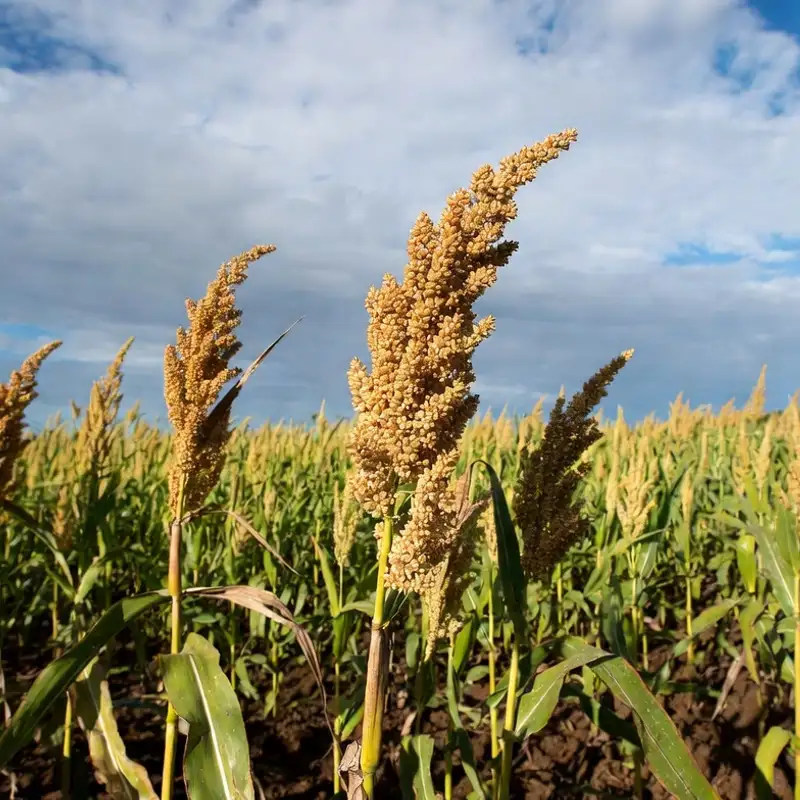
Sorghum, The ancient grain that might just save our future
Today we're diving into something that might surprise you. We're not talking music, we're not talking policy, we're not even talking about the latest AI developments. Today, we're talking about a grain. But not just any grain.
We're talking about sorghum—one of the most ancient, resilient, and frankly underappreciated crops on planet Earth. A grain that's been feeding humanity for over five thousand years. A grain that survives where corn and wheat can't. A grain that's about to become absolutely critical as our climate continues changing and our global population keeps growing.
Sorghum. The ancient grain that might just save our future.
So settle in, because we're about to explore the fascinating history, the incredible versatility, and the untapped potential of this remarkable plant. And I guarantee you, by the end of this episode, you'll never look at this humble grain the same way again.
Let's get into it.
PART ONE: THE ANCIENT HISTORY
Alright, so let's start at the beginning. And I mean the very beginning—because sorghum has been around longer than most of what we call civilization.
Archaeological evidence suggests that sorghum was first domesticated in northeastern Africa, specifically in what's now Ethiopia and Sudan, somewhere between 8,000 and 5,000 BCE. That's right—we're talking about a crop that predates the Egyptian pyramids. While our ancestors were still figuring out how to transition from hunter-gatherers to agricultural societies, they were already cultivating sorghum.
Why? Because it worked where nothing else would.
See, the regions where sorghum originated were harsh. Hot. Dry. Unpredictable rainfall. Soil that wasn't particularly forgiving. And yet people needed food. They needed reliable calories. They needed something that could handle the brutal conditions of sub-Saharan Africa and still produce a harvest.
Sorghum was the answer.
From those African origins, sorghum spread throughout the continent, becoming a staple crop for countless cultures. It moved into West Africa, became central to diets across the Sahel region, spread south into various kingdoms and empires. Everywhere it went, it adapted. Different varieties emerged for different conditions—some for wetter climates, some for extreme drought, some for altitude, some for heat.
And here's what's remarkable: Unlike wheat or rice, which require very specific growing conditions, sorghum is basically the survivor of the grain world. It's the plant equivalent of that person who can sleep on a concrete floor, eat whatever's available, and still wake up ready to work. Sorghum doesn't complain. It just grows.
The grain eventually made its way across the Indian Ocean through ancient trade routes, establishing itself in India and parts of Asia. Different cultures adopted it, gave it different names, developed different uses. In India, it became jowar. In China, gaoliang. Each culture recognized what African farmers had known for millennia—this grain was reliable.
Now, sorghum didn't arrive in the Americas until much later. It came with the slave trade—a dark chapter of history, but one that's important to acknowledge. Enslaved Africans brought sorghum seeds with them, maintaining a connection to their homeland through this familiar crop. In the American South, sorghum found another home, another set of conditions where it could thrive.
By the 1850s, sorghum cultivation had expanded across the southern United States. Farmers discovered something interesting—you could not only eat the grain, but certain varieties of sorghum produced incredibly sweet juice that could be boiled down into syrup. Sweet sorghum became a major crop, particularly during the Civil War when sugar supplies from Louisiana were disrupted. Sorghum syrup became the sweetener of choice across much of rural America.
My own family history connects to this. Growing up in the South, sorghum syrup was a staple. You'd pour it over biscuits, use it in baking, sweeten your coffee with it. That dark, rich, almost molasses-like flavor with hints of caramel and earth—that was sorghum. And most folks didn't think twice about it. It was just part of Southern food culture.
But here's what most people don't realize: While we in America were mainly using sorghum for syrup and animal feed, the rest of the world—particularly Africa and Asia—continued relying on sorghum grain as a primary food source. Hundreds of millions of people have depended on sorghum for their daily calories for thousands of years.
It's the fifth most important cereal crop globally, after wheat, rice, corn, and barley. And yet, if you walk into an American grocery store and ask where the sorghum is, you'll probably get blank stares.
That's about to change. Because sorghum isn't just an ancient grain with a rich history. It's a crop perfectly suited for the challenges we're facing right now.
PART TWO: THE RESILIENCE FACTOR
Let me tell you why sorghum matters more today than maybe ever before.
Climate change is real. I'm not here to debate it—the evidence is overwhelming. And one of the major consequences of our changing climate is increased stress on our food systems. Droughts are becoming more severe and more frequent. Water resources are becoming scarcer. Growing seasons are becoming less predictable.
Traditional crops that require abundant water—corn, wheat, rice—are struggling in many regions. Farmers are watching yields drop. Irrigation costs are skyrocketing. And we're realizing that our current agricultural system, heavily dependent on these water-intensive crops, might not be sustainable long-term.
Enter sorghum.
Sorghum is what agronomists call a C4 plant. Without getting too deep into the biochemistry, this means sorghum photosynthesizes more efficiently than most crops, especially in high temperatures. It can maintain productivity even when temperatures soar above 100 degrees Fahrenheit—conditions that would devastate corn or wheat.
But the real superpower of sorghum is its water efficiency. Sorghum requires approximately 30% less water than corn to produce the same amount of grain. In drought conditions, sorghum can essentially go dormant—shutting down growth temporarily, conserving resources—and then resume growing when moisture returns. Corn can't do that. Wheat can't do that. Sorghum can.
The plant has an extensive root system that digs deep into the soil, accessing moisture that other crops can't reach. Those roots can extend six feet or more below the surface, finding water reserves that keep the plant alive even during extended dry periods.
Sorghum also tolerates poor soil conditions better than most grains. It doesn't require heavy fertilization. It resists pests relatively well. It can grow in alkaline soils, acidic soils, soils with high aluminum content that would poison other crops. Basically, sorghum grows where other things give up.
Now, I know what you're thinking: "Duke, if sorghum is so great, why isn't it everywhere already?"
Fair question. The answer is complicated, involving agricultural subsidies, historical crop preferences, infrastructure built around corn and wheat, and frankly, a lack of consumer awareness in developed countries. But that's starting to change.
As water scarcity becomes a pressing issue—particularly in the American West and Southwest—farmers are reconsidering their options. Growing corn in Arizona or West Texas is becoming economically unsustainable. The water simply isn't there. But sorghum? Sorghum can work.
Research institutions are investing heavily in sorghum breeding programs, developing new varieties with even better drought tolerance, improved yields, and characteristics that make the grain more appealing for various uses. The USDA, universities, and private companies are all recognizing sorghum's potential.
And globally? Sorghum is already being recognized as a critical crop for food security in regions facing the worst effects of climate change. Organizations like the UN Food and Agriculture Organization are promoting sorghum cultivation in sub-Saharan Africa, where changing rainfall patterns are making traditional crops increasingly unreliable.
The resilience of sorghum isn't just agricultural—it's economic and social. When crops fail, communities suffer. Food prices spike. Hunger increases. Political instability follows. Crops that can reliably produce food even in difficult conditions aren't just about farming—they're about human security.
Sorghum represents stability in an increasingly unstable climate. And that matters.
PART THREE: THE VERSATILITY - MORE THAN JUST GRAIN
Now let's talk about what you can actually do with sorghum, because this is where things get really interesting.
First, there's grain sorghum—what most people think of when they hear "sorghum." The seeds can be white, yellow, red, or brown depending on the variety. And you can use sorghum grain in basically any way you'd use other grains.
You can pop it like popcorn—seriously, sorghum pops into little crunchy kernels that make a great snack. You can grind it into flour for baking. You can cook the whole grain like rice or quinoa. You can ferment it into beer—actually, traditional African beers have been made from sorghum for thousands of years, and now craft breweries in the U.S. are experimenting with sorghum beers, especially for gluten-free options.
Speaking of gluten-free: Sorghum is naturally gluten-free, which makes it incredibly valuable for people with celiac disease or gluten sensitivity. As awareness of gluten issues has grown, so has interest in alternative grains. Sorghum flour is becoming more common in gluten-free baking, providing a mild, slightly sweet flavor that works well in everything from bread to cookies to pancakes.
Nutritionally, sorghum holds its own against more popular grains. It's high in protein—comparable to wheat. It's rich in dietary fiber, which most Americans don't get enough of. It contains significant amounts of iron, B vitamins, and important minerals like phosphorus and potassium. Some varieties of sorghum are particularly high in antioxidants, especially the darker-colored varieties which contain compounds similar to those found in berries.
Research is showing that sorghum may have specific health benefits beyond basic nutrition. Some studies suggest it can help regulate blood sugar levels, making it potentially beneficial for diabetics. The antioxidants in sorghum have been linked to reduced inflammation and potential cancer-fighting properties, though research is still ongoing.
But grain isn't the only product from sorghum. Remember sweet sorghum I mentioned earlier? Those varieties are grown specifically for their stalks, which contain sweet juice. That juice can be processed into syrup—the traditional Southern sorghum molasses—or it can be fermented into ethanol for biofuel.
In fact, sorghum is becoming increasingly important in the biofuel industry. Because it requires less water and fewer inputs than corn, sorghum-based ethanol production can be more sustainable and more cost-effective, especially in drier regions. Brazil, India, and increasingly the United States are looking at sorghum as a biofuel crop that doesn't compete as directly with food production.
Then there's forage sorghum, grown specifically as animal feed. These varieties are bred for maximum biomass—tall, leafy plants that cattle, sheep, and other livestock can graze on or that can be harvested and stored as silage. For ranchers in dry regions, forage sorghum can be a lifesaver when drought makes traditional pasture unavailable.
There's also broom corn—a variety of sorghum with long, fibrous seed heads that have traditionally been used to make brooms. Yes, actual brooms. Before synthetic materials took over, most brooms in America were made from sorghum. And there's still a small but dedicated market for traditional sorghum brooms, particularly among people who appreciate traditional crafts.
And we're just scratching the surface. Researchers are exploring using sorghum stalks and residue as building materials—compressed into particleboard, used as insulation, even processed into biodegradable plastics. The entire plant can be utilized, with virtually no waste.
In developing countries, sorghum provides not just food but also economic opportunity. Small-scale farmers can grow sorghum with minimal inputs, process it locally, and sell it in local markets, keeping money circulating within their communities rather than depending on imported grains.
The versatility of sorghum means it can fit into multiple agricultural and economic systems. It's not just a single-purpose crop—it's a multi-tool. And in a world where adaptability is increasingly valuable, that flexibility matters enormously.
PART FOUR: THE FUTURE - WHY SORGHUM MATTERS MORE THAN EVER
So where do we go from here? What's the future of sorghum?
I think we're standing at a turning point. For decades, sorghum has been undervalued, overlooked, treated as a second-tier crop. But the combination of climate pressures, increasing awareness of dietary diversity, and growing recognition of sustainable agriculture is creating a perfect moment for sorghum to step into the spotlight.
Let's talk about what needs to happen.
First, we need better infrastructure. Right now, most grain processing facilities in the United States are designed for corn, wheat, and soybeans. Elevators, mills, storage facilities—they're all optimized for those crops. To make sorghum more commercially viable, we need infrastructure that can efficiently handle sorghum grain. Some of that is being built, particularly in states like Kansas and Texas where sorghum production is concentrated, but we need more.
Second, we need consumer education. Most Americans have never consciously eaten sorghum. They don't know what it is, what it tastes like, how to cook it. Food companies and agricultural organizations need to invest in marketing and education—recipe development, cooking demonstrations, featuring sorghum in restaurants, getting it onto grocery store shelves in appealing formats.
The gluten-free market is already helping with this. As more people seek gluten-free alternatives, sorghum flour and sorghum-based products are becoming more visible. But sorghum shouldn't be pigeonholed as just a gluten-free option—it should be recognized as a valuable grain in its own right.
Third, we need continued investment in agricultural research. While sorghum is already remarkably resilient and versatile, breeding programs can make it even better. We need varieties optimized for different regions, different end uses, different growing conditions. We need sorghum that's easier to harvest mechanically, that threshes more cleanly, that stores better, that has improved nutritional profiles.
The genetic diversity within sorghum is enormous—thousands of varieties exist worldwide, each adapted to specific conditions. That genetic library is incredibly valuable for breeding programs. Researchers can draw on traits from different varieties to create new hybrids that combine the best characteristics.
Fourth, we need policy support. Agricultural subsidies in the United States have historically favored corn, wheat, soybeans, and cotton. Those subsidies shape what farmers choose to grow. If we want to encourage more sorghum production—especially in regions where sorghum makes more environmental sense than water-intensive alternatives—we need policy frameworks that support that transition.
This isn't about abandoning other crops. It's about diversification. It's about giving farmers more options. It's about building agricultural resilience through crop diversity rather than monoculture dependence.
Globally, sorghum is already being recognized as essential for food security. The African Union has declared sorghum a strategic crop for the continent. International development organizations are funding sorghum research and supporting smallholder farmers who grow it. As climate impacts intensify, particularly in tropical and subtropical regions, sorghum will become even more critical.
There's also fascinating work being done on sorghum genetics at the molecular level. Scientists have fully sequenced the sorghum genome, which is providing insights not just for improving sorghum itself, but for understanding plant biology more broadly. Some of what we learn from sorghum's drought tolerance mechanisms could potentially be applied to other crops through selective breeding or genetic modification.
I want to be clear—I'm not advocating that sorghum replace other grains entirely. That's neither realistic nor desirable. What I am saying is that sorghum deserves a much larger role in our agricultural systems and our diets than it currently has, particularly as environmental conditions make water-intensive crops less viable in many regions.
The future of agriculture isn't going to look like the past. We can't keep doing things the way we've always done them and expect the same results when the underlying conditions are changing. We need crops that can adapt. We need diversity. We need resilience.
Sorghum offers all of that.
CONCLUSION
So here's where we land.
Sorghum is an ancient grain with a modern purpose. It's been feeding humanity for five thousand years, adapting to countless environments, surviving conditions that would destroy other crops. It's nutritious, versatile, sustainable, and increasingly relevant.
For those of us in developed countries who've never thought much about sorghum, it's time to start paying attention. This isn't some exotic specialty item—it's a practical, viable grain that can and should be part of our food systems.
For farmers facing increasing drought stress, rising water costs, and uncertain growing seasons, sorghum represents a real alternative that doesn't require abandoning farming or moving to entirely different regions.
For food companies and entrepreneurs, sorghum represents opportunity—new products, new markets, solutions for consumers seeking gluten-free options or simply wanting to diversify their diets.
For policy makers concerned about food security, agricultural sustainability, and climate adaptation, sorghum should be part of the conversation. Supporting sorghum research, infrastructure, and market development is an investment in resilience.
And for all of us as eaters, as consumers, as people who care about where our food comes from and whether our agricultural systems are sustainable—sorghum is worth knowing about, worth trying, worth supporting.
The next time you're in a grocery store or shopping online, look for sorghum flour. Try popped sorghum as a snack. Cook whole grain sorghum like you would rice or quinoa. Drizzle some sorghum syrup on your pancakes or biscuits. Support companies that are working with sorghum. Ask restaurants to feature it.
Every small action contributes to building markets, creating demand, and encouraging farmers to grow more of this remarkable grain.
Sorghum isn't going to save the world by itself. No single crop can do that. But it's an important piece of the puzzle as we figure out how to feed ten billion people on a warming planet with finite water resources.
Sometimes the solutions to our future challenges come from our past. Sorghum has been there all along, quietly doing its job, feeding millions, surviving where others couldn't. Maybe it's time we gave it the recognition and support it deserves.
This is Summer, and you've been listening to Duke Tyner podcast. Thanks for joining me on this deep dive into the world of sorghum—the ancient grain with a future.
Until next time, keep questioning, keep learning, and keep appreciating the remarkable complexity and resilience of the natural world that feeds us.
Take care, everyone.